Sunday, January 15, 2023


How The Childhood, Adolescence and Young Adulthood Shaped Dickens and His Portrayal of Older Adults in OLIVER TWIST

 [PART TWO]

                                                        The final night of Fagin before he "faced the drop"


                                               An Early Portrait of Dickens as he was writing
                                               Pickwick Papers AND Oliver Twist


The relationship between the young adult Dickens and his 17-year-old sister-in-law Mary has, over nearly 186 years, been the subject of much speculation.  The reason for that speculation was because of his intense and lifelong reaction to her sudden and unexpected death on the night of the 6th/7th May 1837. Mary often stayed with the Dickens family overnight, having her own bedroom at 48 Doughty Street. On the one hand, it can be explained by grief, which he never really processed, yet on the other, it was considered to be "charged with erotic passion". The jury remains out, but for me, it is highly unlikely to have been the latter as over the years I have known older adults never having come to terms with the tragic death of a close relative dying in their childhood or mid-adolescence. That said Dickens was used to experiencing death, including of his own children, but did not nevertheless react in such an intense, even obsessive way. He wore Mary's ring throughout his life and was known to have kept her clothes and from time to time taken them out to touch them. Incidentally, it is now reckoned that Mary in 1835, developed a rheumatic fever which damaged her heart.

CONTEXT IS EVERYTHING

So what on earth has this to do with how the 25-year-old Dickens portrayed older characters? Put simply, it is all about context. Firstly whilst writing he was, at this time, traumatized. Secondly, we know he was in many ways of a sentimental, even immature disposition. In addition, we know already about his attitude towards women in general and young women in particular. Fourthly, he modelled the character of Rose Marlie in Oliver Twist  on Mary describing Rose as " So mild and gentle; so pure and beautiful; that earth seemed not her element, nor its rough creatures her fit companions."  'Mary' would be featured in numerous novels throughout his writing career. The juxtaposition between Fagin's portrayal, and that of both Nancy and Rose, to say nothing of Oliver himself with the brutishness of Sikes becomes self-evident. It is a powerful Victorian literary device that Dickens was now using to significant effect. 

We also need to consider the context of his early childhood and adolescence, whereby his father was imprisoned for debt; his own sense of abandonment; his brief but again traumatic time working at a blacking factory which for him was a pivotal point in his life course. However, Dickens always controlled the narrative of his childhood and a "false memory or memories" undoubtedly influenced Dickens. Michael Allen, in his excellent book Charles Dickens and the Blackening Factory ( 2011), argues that Fagin was not based on Isaac Solomons but a certain Henry Worms (aged 89) who greatly influenced the 8-year-old Dickens. It is worth remembering that this child temporarily "lost" his father and his own sense of self at the same time. For an eight-year-old, it was, in his imagination, his whole future.  Dickens interestingly blamed his mother, not his father, which brings us to the older adults in his early/teenage life who would have shaped his view of age and ageing and the older people he was in contact with in these formative years. 

Not surprisingly our parents or those that brought us up have a profound influence on our development and this was certainly the case for Dickens. Regarding his mother, Elizabeth was generally considered by those who knew her as a "sweet, caring mother". Dickens would however in his 3rd novel Nicholas Nickleby portray her in the character of Mrs Nickleby as a well-meaning scatterbrain, but weak. She was a harsh caricature of his mother. By the time Dickens was born, Elizabeth was 36 years old and Dickens never forgave her for sending him to the Blackening Factory and on John Dickens's subsequent release from prison wanting to send Charles back!  How far do we perceive our parents (or primary caregivers) approaching mid-life as old? Indeed we need to ask more generally how far children see older adults in their lives negatively and thus hold prejudices against them as they reach adulthood? It may have less to do with chronological age but with how the older person relates ( or does not) to the child.  Children empathise with those who care for them, treat them, look after them, and listen to them. Elizabeth failed Dickens's test as a mother, not necessarily an old one!

We have little knowledge of Dickens's relationship with his paternal and maternal grandparents and even Dickens's own account of his childhood and adolescence gives little away. He does however state in 1853 ( aged 41yrs) that he received his " earliest and most enduring impressions among the barracks and soldiers, and ships and sailors" (Where We Stopped Growing). We can only speculate whether this was for good or ill! My impression however from my sofa-based non-academic research was that he developed a somewhat victimised approach to himself and his lot, even a 'woe-is-me' disposition. I found it a pretty dry cul de sac in tracing relatives or significant others whom Dickens might have considered "elderly" [feel free to point me in the right direction!]

OLD AGE IN THE 18TH, EARLY 19TH CENTURIES

Before returning to the specific older characters in Oliver Twist it is important to note that in general terms preadolescent attitudes towards older adults, ageing, attitudes and differentiation and quantity and quality of contact will shape a child's view. Current research evidence indicates that ageism exists from around the age of four years. In Georgian England and hence Dickens's childhood he would hold attitudes determined by his daily experiences of older adults - relational or casual- living in Chatham and especially London - would be both negative and positive. Attitudes that identify passivity, sadness and loneliness are prevalent today, but was this relevant in the Georgian/Victorian era?  We know in his early years and childhood he experienced the good, bad and ugly behaviours of grown-ups whatever their chronological age. Through the eyes of Oliver Twist, he would have drawn on not just these years, but his early adulthood as a journalist and Court correspondent. He would also be influenced by society's attitudes, policies, practices and treatment of older adults in late Georgian England. Here we need to focus primarily on London. 

As usual, the writer and historian Pat Thane is informative both in her book Old Age in English History ( 2000) and as Editor of The Long History of Old Age (2005). Dickens's life transitioned the late Georgian and early mid-Victorian eras, but attitudes do not change on the crowning of a specific monarch, so caution is urged in terms of societal attitudes and the triggers that lead to change. Dickens we know had a particularly negative view of the Poor Law and Workhouses in particular, especially of the care and wellbeing of children and juveniles that he witnessed or gained from Reports,  newspapers and court proceedings and judgements etc. That said, the character of  Sally, the "old workhouse inmate" confesses to Mrs Corney ( later wife of Mr Bumble) on her death bed that she had stolen the gold locket and ring that Oliver's mother had entrusted to her. This was also witnessed by Martha and Anny who were said to be "old crones  looking and listening through chinks in the door."  The narrative speaks for itself regarding the link between their age and behaviour. Interestingly too, this workhouse was situated some distance from London, though Dickens appears to have lived close to a specific workhouse, which unless I am mistaken, has recently been argued was his source.

David Troyansky wrote about ageing and old age in the 1700s in Pat Thane's The Long History ( Chapter 5) that the era was one of transition in the history of old age and in England there was a cultural continuity and representation which were both positive and negative coexisting. Socio and economic differences mattered and literary representations of the aged distinguished between the more comfortable experiences and expectations of the well-off old compared to that of the precariousness of those who were not. What was evident throughout, and certainly as we move into the early 1800s, is that people were considered "old" at around 50 years of age, which is the threshold I have used in determining old adults in Dickens's writing. Industrialisation and urbanisation would be increasingly marked at the time of Dickens's childhood and certainly young adulthood. If you had relative wealth you had later life "autonomy, responsibility and authority" and thereby choices. For those in late Georgian and certainly into the 19th Century, many experienced what was considered a "good old age as defined by contemporary norms, with harmony between the ageing individual, their family and the wider community". Of the notions of sickness, dependency and infirmity, Troyansky writes these " applied only to the very old and the poor" who require care.

Increasingly however the state had become involved, with the medical profession writing about ' diseases of the aged' which grew by the time Dickens reached young adulthood. Enlightenment interest led to narratives of increased intergenerational engagement and surprisingly a "society of all ages" with paintings and graphics of "wrinkly hands", reflecting experience and work, rather than our 21st Century view of ageism and 'othering'. Nevertheless, there still existed imagery that regarded older women as " man-hungry spinsters gigolo hungry crones, and sex-crazed widows". It is clear that in this era under discussion, there was diversity, opportunity, a valuing life experience, and the growth of consumerism - if you had sufficient resources, were male and could draw off familial or community support. David Troyansky's conclusion to his analysis of the 1700s is instructive, especially as Dickens was born 3 years before the end of the Napoleonic Wars, briefly lived in the naval dockyard of Chatham and most of his childhood and youth in London. 

 As  Europe entered the 19th Century, experience of events of the 1790s and subsequent Napoleonic Wars encouraged awareness of the passage of time. Revolutionaries spoke of an 'ancien regime', and those who reached maturity in that era would be the old of the 19th Century ( p209)  
 
DICKENS AND GERONTOPHOBIA

Dickens reached maturity let's say around the early 1830s, getting a job as a freelance Court reporter, falling in love, and publishing his first story. By 1836 (aged 24) he became a husband and begins to write Pickwick Papers. His later years (old age; 50 plus) lasted less than a decade.  He hated the idea of becoming old, and of being considered old. When and why did he start to dread its onset? I would like to explore this through his later novels, but presently looking at his second. The somewhat arbitrary Victorian era commenced with the death of William IV (1837) the same year Dickens becomes a father, moves to Doughty Street and death of his sister-in-law Mary.

                                 
                                  A portrayal of Dickens in his 50's 


We get ahead of ourselves. Dickens's maturation was a Georgian one and having superficially explored the key cultural and social-economic circumstances for older adults both rich and poor we can be confident that his characterisations were based on his experiences to date of his contact and general observations of age and ageing. We are on the cusp of better transportation, major industrialisation, population growth, greater travel, urbanisation, science and the increased medicalisation of ageing. These would have a profound effect during his life course on him personally and his writings.

We also see that we are at the point where alongside intellectual, scientific, cultural and literary expression, new economic and manufacturing techniques brought about increased poverty and the precariousness between what might be deemed the middling classes ( eg trade /self-employed) tipping and falling quickly into destitution. Dickens in some ways was already demonising both the wealthy and destitute regardless of their chronological age. This has led some commentators to conclude there was nothing gerontophobic about him. That said, if gerontophobia is not just about an irrational fear of old age and especially growing old ( which he was) but includes being disdainful or having an aversion to old people then that is the journey of discovery we are on, based on his novels to find out.

What we do know from a certain letter written by Thomas Jefferson to John Vaughan in 1815 ( quoted in Anthony and Sally Sampson. The Oxford Book of Ages 1985) is telling:

" Nothing is more incumbent on the old, than  to know when they should get out of the way, and relinquish to younger successors the honours they can no longer earn, and duties they can no longer perform" 

The question is whether Dickens as a young adult shared or rejected this opinion.

I shall in future blogs explore Dickens's older characters' and caricatures in more detail from his middle and later novels, particularly of older women, and Victorian gerontology where, as Sara Zadrozny says " gender difference played an important part" in shaping views and  Karen Chase's assertion that " Dickens made his older characters " responsible for their own age"


THE CAST OF "OLDER ADULTS" 


As always I'm indebted to Donald Hawes's Who's Who in Dickens: Routledge (2002) for a pen picture of the older characters and those of an "uncertain age". It is important not just to consider how Dickens describes these characters, but their role and function within the novel.  

Fagin -of course: See above 

Mr Brownlow: A kindly, elderly gentleman with " a heart large enough for any six ordinary old gentlemen of humane disposition". In fact, he is not so kind and humane when influenced by Grimwig's negative view and in addition after Oliver's Court appearance considers him an "imposter" until subsequently he is convinced by Rose Marley and Mrs Bedwin of Oliver's story. His heart was clearly not large enough to see children of the workhouse favourably. This might be unfair, but perhaps reflected a common view held by well-off and comfortable older adults. 

Mr Bumble: "Fat, choleric and pompous man" We do not know specifically if he was an older adult, but taking into account his position and role within the novel, and our threshold for defining "older" 50+ I have included him, but it remains conjecture. Bumble has to be seen as a reflection of the harshness and brutality of the Workhouse system and thus complicit in the abuse of an "innocent, even saintly young boy". It is interesting to note that in their later years, there is a comeuppance from their actions and reflects people in later life will be punished or are redeemed and forgiven ( eg Scrooge) if they repent. 

Mr Losberne: " An eccentric old bachelor" and doctor to Mrs Maylie. He " had grown fat, more from good humour than from good living, kind and hearty". Dickens portrayed him, according to Hawes's narrative, as a "kindly and sagacious adviser" and comes into play following the attempted burglary. 

Mrs Maylie: An elderly and stately lady who provides Oliver with a home following the burglary. This is a positive reflection of an older adult demonstrating compassion and the importance of familial responsibility. 

Old Sally: (See above)

Mrs Corney ( wife of Mr Bumble and Matron) has to be viewed perhaps not in the context of her age, she was always a nasty and abusive person, but Dickens's view of Workhouses and the policy and practice implications of the Poor Law Amendment Act of 1834. 

Mrs Bedwin: The housekeeper of Mr Brownlow - "a motherly lady". As with much Victorian literature, there is little attention given to the experience of growing older and minor characters they are introduced in their old age. We do know that the role of the Housekeeper (including Maids) during Dickens's time was protected in terms of minimum wages and from exploitation, but it could be argued that this depended on the employer. The Housekeeper's role was critical, but hard work. Their role was second to that of a butler and had a status second to the butler. Clearly, Mrs Bedwin had an influence and together with Dicken's portrayal of Brownlow she had agency and independence of thought and indeed opinion. A positive picture. We assume given she was "an old lady" she had been with the Brownloews may be from her young adult years ( even as a child?). She would have been a very junior maid. Pure speculation on my part.          

Edward "Monks" Leeford  (of uncertain age). We are not given a specific age for Oliver's half brother but Dickens portrayed him via Nancy's narrative "as dark, withered, and haggard, with lips often discoloured and disfigured with marks of teeth" and with hands that are also wounded with teeth marks. The imagery might have less to do with his chronological age more to say about his character and role and the fact that he put the fear of God into Fagin which reinforced his cruelty.  His character also is quite gothic. In attempting to include or reject this character in our exploration of Dickens's portrayal of older adults, the original illustration by George Cruikshank is telling. He isn't. This potentially evidences that Dickens was pretty intergenerational in his descriptions of villainous protagonists. Fagin takes top place in the numerous theatre, film and TV adaptations of Oliver Twist whilst Monks is airbrushed out of the story! 

Mr Grimwig (of uncertain age) Given the context, being a friend of Brownlow, whose "brusqueness conceals a kind heart" and his view that all children are "either mealy" or beef-faced" arguably Grimwig fits an age-related stereotype of older people's attitudes, assumptions and prejudices against younger generations which exists even today.   

Mr Gamfield ( of uncertain age) We know that Master Sweeps of which Gamfield was one,  purchased young boys from "poverty-stricken parents" and also from orphanages and Workhouses. The smaller the boy the better. "Apprenticeship" was basically slavery. When Dickens wrote Oliver Twist (1837), Parliament had in 1834 already passed the Chimney Sweepers Act which required a magistrate to hear directly from a child 14yrs and older to be "willing and desirous" to become one. Existing child sweeps were required to wear protective clothing and certainly not be expected to clean a chimney whilst the flue was hot! Gamfield would have been subject to ensure these conditions were met. Indeed the magistrate refused to agree to Gamfield's  request when Oliver became "terror-stricken"

So what sort of MasterSweep was he? Dickens clearly says he was cruel but was he "old" by our definition? Researching MasterSweeps in the 19th Century we know they were engaged in a lucrative business and apprenticed up to 20 boys. We do not know if Gamfield was middle-aged or 50 years plus but he already had a network and relationships with Workhouses and orphanages, and was familiar with the 1834 Act. We can only conjecture, but if he had been a young adult in the mind of Dickens, one assumes he would have mentioned it. Dickens was clearly familiar with the "industry" and the law applying to it. In my view, there was sufficient information from both the novel, Dickens's social awareness and the history of Child Labour to at least ponder the question.    

Mr Fang:   We have the benefit of a George Cruikshank illustration "Oliver escapes being bound apprentice to the Sweep" and a later interpretation of Fang by J Clayton Clarke (below).                        


Mr Fang ( Magistrate ) by                                                 George Cruikshank illustration in original

J.Clayton Clarke                                                                 Oliver Twist ( as agreed by Dickens)


Here we are on firmer ground in including the portrayal of this "choleric and arbitrary police magistrate who hears the charge against Oliver of theft. It strikes me that Dickens's portrayal, like so many others of older adults in his writings, has perhaps less to do with his view and attitude toward age and ageing, but related to their profession or what they represented. This is certainly the case with Fang. 

Giles:( of uncertain age) Butler and steward to Mrs Malie who actually shoots and wounds Oliver during the burglary. He is considered a cowardly individual.  Whilst we have no reference to his chronological age, we can assume given his position and role within the household he was at least nearing 50 years or above. Dickens clearly did not see his age as relevant or worthy of note.   

Blathers and possibly Duff: We do however know that Blathers was 'aged about fifty'. Of Duff, we do not know, but by association with Blathers - both being Bow Street officers - we can only speculate. Dicken's portrayal is as a "red-headed, bony man; in top-boots; with a rather ill-favoured countenance, and a turned up sinister-looking nose". They pitch up to investigate the burglary and their very names evidence their bumbling approach and their total inefficiency and idiocy as regards police investigation who do not have any sympathy with Oliver. Losbourne's attempt to protect Mrs Maylie and Oliver via a deflection both police officers are dispatched! We do have the benefit again of a George Cruikshank illustration (below) - or do we?

Again we could conclude that Dickens was commenting on the Bow Street Runners and the London police and age was irrelevant, but why then did he refer to it in terms of Blathers? The fact that we are in the last days of the Runners who were redundant by 1839 when absorbed into the Metropolitan Police. Dickens was writing Oliver Twist around this time but would have had the experience of Runners throughout his childhood and adolescence and as a young reporter.  


                                George Cruikshank illustration: 'Oliver waited on by the Bow Steet Runners'


Mr and Mrs Sowerberry (of uncertain age?) 


                     Mr and Mrs Sowerberry ( 2nd illustration - Sol Eytinge Jr (1867) ) Victorian Web

Dickens always kept tight control over the illustrations used in his novels. In the first edition of Oliver Twist illustrator, George Cruikshank ignored this couple. I have used the image from Sol Eytinge, Jr. (above). The narrative of Dickens was that Mr Sowerberry was a " tall gaunt, large jointed man attired in a suit of threadbare black, with darned cotton stockings of the same colour, and shoes to answer". Mrs Sowerberry is "a short, thin, squeaked-up woman with a vixenish countenance. She was depicted as cruel and wicked towards Oliver. Subsequent portrayals have, however, in adaptations of the book, interpreted Mr Sowerberry as an "older male".  This does not help us in our quest. What may be relevant is how Dickens portrayed two later undertakers ( Mr Mould in Martin Chuzzelwit and Mr Omer in David Copperfield) written in 1842 and 1849 respectively. Here the author is quite explicit in that Mould was "a balding elderly man" and Omer is " a merry little old man in black". The portrayal of Mr Sowerberry may well have led later depictions to see him as an older adult but Dickens references that whilst he was completely dominated by his wife, he at heart was "in general rather given to professional jocosity". Given that Oliver Twist, Martin Chizzelwit and David Copperfield were all written between 1837 - 1842 the portrayals were based more on middle-class attitudes, the late Georgian period and early Victorian England Dickens portrayed Mr and Mrs Sowerberry as caricatures. He was after all ever the comic.

The funeral business of this period ( unlike today) was precarious for undertaker owners, and Dickens portrays this well in his depictions and the circumstances of the Sowerberrys. The lower middle classes lived on the precipice between reasonable comfort, the poorer classes and indeed destitution. The Co-op was sometime in the future!

Sally Thingummy: An "old pauper" an inmate of the workhouse who later dies there. Sally was at Oliver's birth and "rendered rather misty by an unwonted allowance of beer". It has been recorded that older female inmates were frequently called upon to undertake "nursing" and care duties given they were cheap labour and saved the Workhouse and Parishes' money. It would be wrong to assume that Mrs Thingummy and other older inmates were thieves and drunk. Dickens's general characterization is telling given his experience of workhouse practice. He was never nuanced in his opinions.

Mr Limkins:  We have no indication as to whether this character was fifty years plus, only that he was a "red-faced gentleman in the high chair" and Chairman of the Parish Board where Oliver was born. We can assume, though not certain, that his status as Chairman, implies at least he was in his middle years.

The Bookseller:  "An elderly man of decent but poor appearance". Nothing to see here! 

                                 From George Cruikshank. Our Bookseller is in the doorway as the Artful

                                 Dodger picks the customer's pocket.


There are some thirty-six named/unnamed characters in the novel, of whom twenty are certainly called "old/elderly", or are, for our purposes, 'of uncertain age.' Their descriptions lead us to not unreasonably consider them as around fifty-plus. Therefore, this is in the order of some 56%. At one level this may be of little relevance but raises the interesting question of why this young aspiring author, mainly self-educated, of a poor and precarious background, emotional and sensitive desperately seeking fame and fortune finds age so fascinating? By 'age'  I mean both children and older adults. The juxtaposition between Dickens's portrayal of young vulnerable and exploited children with cruel, feckless, abusive, self-indulgent older adults is interesting. 

Dickens the storyteller, actor, journalist, comic and perhaps the greatest of English novelists was of course of his time. His books are now known only through school curriculum requirements (understandably his shortest books) or film and TV adaptations. Millions of words have been written about his life and work and I doubt any aspect remains to be discovered. His portrayal of older adults is normally focused on a few leading characters or dominant themes in publications addressing broader literacy, cultural, and public policy issues and critiques. His portrayal of older adults from a gerontological and life course perspective seems worthy of further exploration which is the journey we are on. Two novels down, thirteen to go, but we cannot ignore at least one of his Christmas Books that from 1843 till today defined not just benevolence and gifting. but the redemption and salvation of perhaps the most miserable miser of all time and in so doing  defined Victorian "age and ageing" 


There are however four further novels 1838-43 which need to be opened for examination, as well as Dickens's life events and transitions between Doughty Street, Devonshire Place, births, and foreign tours. Tiny Tim and 'you know who' will have to wait their turn!


Nicholas Nickleby [Part One] to Follow

"A Ruined Gentleman, A Cruel Schoolteacher, A Melodramatic Thespian, A Ruthless Moneylender and A Kindly Old Clerk"


Saturday, December 31, 2022

In The Shadow of an Ageing Pimp, Crook and Paedophile

HOW CHARLES DICKENS PORTRAYED OLDER CHARACTERS IN OLIVER TWIST [ PART ONE] 


WHETHER  it was Fagin's age or ethnicity which so obsessed Dickens, the now very successful young author, there can be very little doubt that in the words of commentator S.Gill's introduction to the Oxford World Classic series Oliver Twist (1999) " the presentation of Fagin has a kind of concentrated ferocity"

Yet of all the words written since 1837-39 about Dickens's intention, very little has focussed on Fagin's age and his portrayal as "a very old, shrivelled Jew" with a "villainous and repulsive face...obscured by a quantity of matted hair." The debate since the book's publication has been about whether Dickens was anti-Semitic but very little about whether he was also gerontophobic. Edgar Johnson (1951)  in his dated contribution to this "Jewish question" concludes that he was not. The question however remains to this day despite the millions of words written about Dickens before and since. My interest here is to explore Fagin in the context of his portrayal of older characters in Oliver Twist asking the questions Johnson asked but related to old age and older people. "Does Dickens draw on other derogatory" pictures of older adults in his writing, and not favourable ones? "Do his utterances elsewhere imply an ill opinion" of older people as a group"? 

It is worth mentioning that 'Fagin is referenced 257 times in the first 38 chapters - as " the Jew" whereas the race and religion of Bill Sikes, goes unremarked' ( Independent 07.10.2005). Dickens's response to the criticism at the time was seen by many as defensive and naive. 

There's little doubt that despite Dickens's later deletion of the specific term "Jew" when referencing characters, the physical repulsiveness can be viewed in the context of both anti-semitisms, and old-age gerontophobia and hence literary gerontology. Quoting the Independent again:

               " Read how Dickens introduces the villian- standing before a fire, fork in hand,with a villainess and repulsive face , matted red hair. Red hair was worn by the devil in medieval mystery plays. Dickens several times refers to Fagin as "the merry old gentleman," an ancient euphenism for the devil, as is the phrase Bill Sikes uses when he says Fagin looks as if he has come straight from "the old'un without any father at all betwixt you" "


 Older adults are often portrayed in literature, especially Victorian, as corrupting the innocents and purity of children. The conflating of both Fagin's Jewishness and old age as portrayed is a powerful narrative but it is binary. What I am reaching for in this series of Blogs is to gauge, as best I can whether Dickens's view and attitude to age and ageing through his characterization tell us something about the early/mid and late Victorian mindset regarding the concept of later life, age construction, the emergence of Midlife ( with thanks to Kay Heath) and the medicalization of old age.  


                           Charles Dickens was only in his early/mid-twenties when writing Oliver                                Twist. How did his childhood and adolescence affect his view on older                                    adults and hence his characterization? 


 The picture that emerges of not just Fagin, but other portrayals such as Anny, Bumble, Fang, Kags, Mrs Mann, and the "old crone" Martha and Sally, all arguably negative narratives of old age. But to answer the second of Johnson's questions there are characters which can be considered "positive" ( howbeit seen today as stereotypical) such as Mrs Bayton, Bedwin, the Brownlows, Grimwig, Mrs Maylie and as we shall see many others out of some 69 characters in the book! That said, they could all be seen as living in the very long shadow of Fagin.

We need to re-engage with this young author, flush with the success of Pickwick, newly married and increasingly financially secure as he writes what will be a second successful series and book.  Critic and scholar G.K. Chesterton said much later that Oliver Twist " was "by far the most depressing of all his books [and in] in some ways the most irritating.." George Gissing writing after Dickens's death in 1870 reminds us that it was a significant step in social and political history and the importance of not losing sight of [its] historic point of view. Nevertheless, Gissing also thought it "immature" with little "coherency in the structure of the thing; the plotting is utterly without ingenuity, the mysteries so artificial" - with fans like Gissing...! Gill however concludes that despite such observations  the book "remains for all its weaknesses, the most compelling of Dickens's early novels." It is probably not necessary here to outline the plot as readers will know doubt to be familiar with the essential elements and characters, even though through the sometimes distorted lense of Lionel Bart, Ron Moody, Alec Guinness and Harry Seacombe than having actually read the book. Perhaps being unfairly said, we are reminded that Oliver Twist's portrayal as a passive, innocent, naive, and good-natured child is set alongside the evil, scheming, manipulative and despicable characters of Fagin and Sikes. Monks, (who in fact was a young adult), vicious and scheming with Fagin to ruin the reputation of Oliver. Mr Bumble the Beadle, was simply a cowardly bully abusing his position of power, but more of him later and his wife (nee Corney) who is described as "hypocritical, callous and materialistic." Add to this cast of despicable characters is Mrs Man ( "an elderly female") who physically and mentally abuses the children in her care whom she farms out!

In May 1837 Charles Dickens had completed the first four instalments of Oliver Twist when he suspended writing. The tragic and sudden death of his 17-year-old sister-in-law, Mary Hogarth who lived with the Dickens family had a lifelong impact on Dickens as both a person and an author. 


To Be Continued......


PART TWO will explore the Childhood, Adolescence and Young Adulthood of Charles Dickens, the early influencers and influences and how this shaped the minor and major older characters in Oliver Twist. 


Tuesday, December 20, 2022

PRESERVE ME FROM CAMPAIGNS AND AWARENESS DAYS


I have long been ambivalent about international or national days given to raising awareness, be they be focussed on or about older adults, LGBTQ+, racism, human rights, (dis)Ability, mental health and a host of other causes. That is not to say I am against a focus on all these issues - if that be the right word- but I wonder just how effective they are post the Day! 

Many years ago I was involved with a number of national age and ageing focussed charities together with civic sectors (local and central government) - some might argue industry- still am- alongside the Department of Work and Pensions (DWP) in developing our response to the United Nations Older Peoples Day ( 1st October each year). The debate we had was about how best to portray people over 50 years of age in terms of celebration and/or the issues and challenges facing this particular demographic. We decided to focus on celebration and positive active ageing ( whatever that means), accompanied by illustrations of older adults "doing wonderful" things whilst reflecting, as some would argue as an afterthought on those living in poverty, long-term debilitating health conditions, poor housing etc.


Were we successful? Did we influence and change attitudes and challenge the myths and the stereotyping of older adults? Did we strike the balance we sought? I would argue, not at all. 

In the two-part blog, I published recently.  I drew attention to Shereen Daniels's book which sought to dismantle systemic racism in the workplace.). I reflected on my belief that slogans, many campaigns, awareness-raising initiatives and the like are more often than not, simply publicity stunts of the organisations engaged in a particular issue or cause. The blog I referred to, explored Daniels's challenges and insights in the context of the Co-operative Sector and in discussing with a colleague he forwarded a link to the 2017 article written by two academic journalists headed "Stop Raising Awareness Already" 

Fundamentally Ann Christiano and Annie Neimand argue that too many campaigns and awareness-raising initiatives including Special Days may have the laudable aim of communicating their message to a wider audience as possible. Frequently they fail to understand the risks. They build their publicity or events and slogans on false assumptions and presumptions of both their target audience and their messaging. Sometimes this includes the very people on whom their cause is focused.  

The authors believe "that people who are simply given information are unlikely to change their beliefs or behaviour"  and what needs to occur is moving beyond just raising awareness. The goal(s) of a campaign or even Day is " to get people to change how they feel, think, or act and create long-lasting change." For me, 24 hours, or even a week or a month of awareness raising just doesn't cut it. Nor does securing some TV celebrity off a popular soap or inane reality show ( select your own - I make no further comment) or God forbid, a waning or discredited celebrity or public figure who tailgates on a particular cause to increase or rehabilitate their public image or reputation! Too many organisations and so-called "worthy causes" see the Day as a means of simply increasing donations. 


SO HOW DO CAMPAIGNS FAIL?

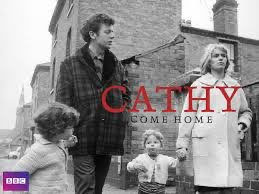
Returning to Christiano and Neimand they rightly make the point that awareness-raising can " be a critical step in creating an environment where change is possible" and can on occasion influence national political attention to an issue citing Black Lives Matter or Transgender Rights. I am reminded that campaigning playwrights or documentaries can have a powerful impact - for good or ill. The seminal "Cathy Come Home"  and homelessness spring to mind. However, the authors argue that awareness has to be linked to strategically explore " a larger effort to drive social change." In this regard they are uncompromising and evidence base that not only can campaigns ( and here I would add Days) fall short and waste resources when only about raising awareness but "actually do more harm than good"

Before exploring the risks I return to the issue of false assumptions and damaging presumptions that stereotype individuals and communities. No more is that prevalent than in the fields of, for example, refugees, Aid, compassionate ageism, social care, race and ethnicity, LGBT+,  loneliness, safeguarding, community development, and climate change. How we think about these and much else will determine our responses, the language and narrative we use, the images marketed and our messaging. The harm is done to individuals, communities, and even countries is incalculable. Undoubtedly some of this will be unconscious, even at a corporate level, and hence the need to at least become conscious of personal and political bias reflecting on the assumptions we make and the presumptions we hold.

Four risks are identified: 

  • Lead to no action: Using shock or humour which can dilute the message even if the campaign is seen at one level as highly successful in terms of attracting audience attention and even media coverage.  
  • Reaches the wrong audience: An audience that in fact has no sympathy with the cause/issue being profiled. In addition, those who are already convinced and engaged with the subject or issue or need. An example would be Human Rights, Refugees, Older Adults and loneliness (let's not forget the John Lewis Christmas advert Man on the Moon)!: Mental health, Travellers,  
  •  Creates harm: This can be linked to the wrong audience. Campaigns need to understand and be sensitive to how an audience might perceive the message. This often occurs when marketing experts are let loose with an issue of which they have very little knowledge but think they do! I recall many years ago taking the NSPCC to task for their Full Stop Campaign. At one level it was highly successful if judged by the number of people ( especially celebrities) who wore their little green badges. It was a false assumption that child abuse can be eliminated, it can't. Constantly referring to delayed hospital discharge as "bed blocking" leads to blaming older adults for bed shortages rather than resourcing hospitals, social care and indeed systemic issues of poor management. The point to be made is that campaigns can do little to address the context and the context is everything. We can so easily normalize issues and reduce or prevent effective responses that deal with the context. The authors raise the "gulf between scholarship (and academic research) that could help practitioners avoid harm, reduce risk, or increase the effectiveness of their efforts and practice is common and wide"  
  • Generates a backlash: Beware partisan politics within Campaigns whereby an issue can directly lead to increasing controversy. The examples used are Teenage and Later Life sex, Vaccine takeup. Here the media can and do feed off a range of issues to increase their own profile, sell newspapers, and can totally undermine a campaign.   


IT'S ALL ABOUT COMMUNICATION, TARGETTING, MESSAGING AND USING THE RIGHT MESSENGER 

This may seem blindly obvious but even multi-million corporate businesses can get it wrong. Ask Walkers Crisps and their "Walkers Wave" campaign; Pepsi suggesting that protesters give the police a can of Pepsi and the suggestion that " if protesters were kinder and gave police a drink, there would be no need for social justice demonstrations" or campaigns; and Amazon's promotion of their show The Man in the High Castle was generally seen as "irresponsible and offensive to WW11 and holocaust and their families" 

Having explored the risks Christiano and Neimand highlight four elements that are important to avoid backlash, harm, and inaction. Firstly to target the audience as narrowly as possible. We often think that a campaign or raising awareness needs to reach as many people as possible. Wrong! Targeting a single individual can be far more effective if there is clarity over the goal and a defined strategy. Secondly, whether an individual or an audience of millions requires a compelling message that resonates, that is also a call to action and does not alienate the very person/people whose attitudes and behaviour one is seeking to change. Thirdly a campaign or awareness-raising day needs to have a clear understanding of what will be different and finally use the right messenger ( oh how many have got this wrong by thinking that a celebrity, any "celebrity" will do? - I'll leave it there but here's a clue!)

  
                                           [ Appeared on the TV show "I'm a Celebrity Get Me Out of Here"
                                            coming 3rd in a public vote (2023)]

I suppose I'm arguing that all organisations, be they civic, civil, or retail think seriously about sacrificing their credibility, their brand, and their resourcing on any campaign or awareness-raising event on the altar of false assumptions and presumptions about their audience. 


Wednesday, October 5, 2022

 DOES SYSTEMIC RACISM EXIST WITHIN CO-OPERATIVES? [PART TWO]


LEADERSHIP 

" Progressive Leaders for today and  the  future commit to seeing how the social construct is used to isolate, disadvantage and make power inaccessible to Black People,"  writes Daniels and continues " They are alert to unequal outcomes and work to dismantle systemic racism within their organisations and areas of influence"

Where are the anti-racist progressive leaders within UK Co-operatives?  I can easily identify them within my primary profession of Social Work and Care but a bit more challenging in the Co-operative. That said the likes of Radical Routes, Mondo and the Co-operative College are beacons within the sector and I readily acknowledge the Co-operative Group itself partnering with Waitrose back in 2020 with an anti-racist campaign. But we should not confuse Leadership with organising an event, a training programme or a campaign.
Daniels helpfully defines the key characteristics that distinguish the Leaders:

1. Humility: Creating safe spaces in the workplace 
2. Moral Courage: Being firm in the face of discomfort and opposition
3. Tenacity: The ability to persist with a course of action even if there is no immediate payoff or reward

Now here's the rub. Despite the laudable Cooperative campaigns and events, that is what they are. Anti-racism is not part of the DNA of Cooperative businesses. Ticking a box, producing a policy or having a discussion with Human Resources just does not cut it! It is not an event, it is an ongoing and monitored process underpinned and founded on "humility, moral courage and tenacity"

Here are Five Questions that Daniels suggests workplaces ask regularly

1. How far does this decision alleviate or worsen inequality?
2. If we do X, what is the impact on Y?
3. Who are the consistent winners and losers here?
4. What other pattern or trend we should watch for?
5. How far are we doing what is comfortable v's what is right?

I am wondering how many policy reports were agreed upon by Co-operative Boards or its "governing" body/Circle that asked these questions or indeed included specific reference to asking and answering "Difficult Questions"? 

Recently I read Phil Wang's "memoir" "Side Splitter "  writing about his experience of what it means to be torn between two continents, specifically about race, empire and colonialism. Putting aside the comedy ( he is a professional comedian) he, as an author, is sharp, and insightful and his chapter on Race dealing with labels stresses his preference for the terms "White" and "Non-White." The language we use is dealt with in some detail by Daniels and it is that which I now turn.

DEFINING MEANING

Many of the terms we use are binary, so for example, "majority" and "minority" are opposites which are value driven indicating a particular status " the first having a higher value than the other and given more status". In addition, the very word "diverse" is "an othering word, an identity of difference construct to produce standards of normality and superiority ...we are all diverse!"  

We need to reflect on the terms and words we use and whether they make us comfortable. Language changes, and increasingly we are more comfortable using the word "Black" There is, however, something uncomfortable with the term "people of colour" and whilst BAME has been normalized it is deeply offensive and should, says Daniels be 'deleted from existence. Rather than listing her 50-plus words and phrases, she emphasises, and this is the key message in our Cooperative context, that we must use language as a device (tool) to "dismantle racism" in our workplaces. I note in passing that  "BIPOC" [Black, Indigenous, and other People Of Colour] is used by some Candian Worker Co-operatives seeking to promote racially diverse and inclusive Co-operatives.   

Our words, speech, writing, images, and symbols which we believe are truths and best practices need to be understood in their cultural context. Daniels writes about "Corporate Regimes of Truth" which requires a total deconstruction of corporate/organisational communication to understand what they are! Here is her checklist( which again I have adapted)

  • SocialConventions - the genesis of our words
  • Why we are uncomfortable with certain words/labels/terms?
  • Why do we take a particular action or use this particular knowledge?
  • Whose interests does this knowledge/policy/action serve?
  • Who benefits from what we say?
  • How and why do they benefit?  
 
My message to the Cooperative Commonwealth is to Reflect, Reflect and Reflect some more; be informed about the changing use of language and benchmark against the three traits that distinguish leaders ( Part One). 

STARTING FROM WHERE WE STAND


" Exploiting diversity and employing more Black people does not show either yourself or your organisation to be anti-racist. It does not enable inclusion. And it doesn't mean you don't have a problem with systemic racism"  ( Shereen Daniels)

Are Worker or Multi-Stakeholder Co-operatives anti-racist?  If the answer is "YES" my response is "Prove it". The starting point is, put simply, by using Daniels's R.A.C.E four-factor Model referenced in Part One. It is a pretty straightforward guide if our Co-operative is up for it. If on the other hand, we think we are anti-racist without evidence.... remember it's not about a campaign, a poster or even an event, then arguably systemic racism exists in your workplace!

Again using Daniels as our guide she explains that there are four levels of her Racial Equality Maturity Model starting with the issue of Compliance ( legal and institutional); an intent to be Inclusive and establishing a Strategic focus with a specific Commitment and lastly Public and Private. The Reflective Questions mentioned earlier in this blog give the framework which could be a useful starting point for any Cooperative business or service interested and willing to explore (audit) where they are starting from. Her approach is both empowering and sensitive to the challenges this journey entails and helpfully points out the steps, key pitfalls and stresses, concluding "it ain't easy"!

I am mindful that readers and especially my co-operative colleagues might be finding this blog too biased, and negative and fails to tell the story of those Co-operatives meeting the challenges, asking uncomfortable Questions and demonstrating the very qualities of anti-racist leadership. If that is the case then I have failed to reflect on the empowerment and practical nature of "The Anti-Racist Organisation."  Let me, therefore leave this section with two quotes. The first is Cheryl Samuels, Deputy Director of Workforce Transformation, NHS England:

"This is an honest, thought-provoking book that takes you on a journey of discomfort that leaves you reflecting on your personal and professional relationship with race and racism" 

The second is Dr Jane Brearly, Founder and CEO, of Intent Health Ltd:

" This book weighed heavily on me, as it should. It's unapologetic, enlightening, and yet practical. If you are truly interested in becoming an anti-racist organisation, you won't just read this once, but will refer back to it again and again"


SO DOES SYSTEMIC RACISM EXIST WITHIN COOPS?


Your call! 

Mine?  YES, THEY CAN AND ARE and it is time to explode the myth that they can't.


Thursday, September 22, 2022

DOES SYSTEMIC RACISM EXIST WITHIN CO-OPERATIVES ? [ PART ONE]


Recently Miles Dadfield, Co-op News digital editor asked in a posting that the co-operative "sector talks the talk on social justice, but how does it work in practice?" He explored Joan S Meyers publication " Working Democracies: Managing Inequality in Worker Co-operatives (2022 ). In essence, Meyers concluded from her detailed study of two North Californian worker co-operatives "that worker co-operatives can resist the naturalization of inequality" but acknowledged that they "face questions around equality, ownership, power and identity"


Miles rightly pointed out that worker-led models are "touted as a counter force" to large private Corporate bodies and increasingly becoming worthy of profiling in the mainstream press. Returning to Meyers, Miles was absolutely right to highlight her discovery that "almost all of the members of both Co-operatives shared similar levels of personal and family education, family wealth and occupational prestige, and 'class cultures'". My question is, when looking at the Co-operative sector itself here in the UK, does systemic racism exist? 

My starting point is why, according to Kate Whittle, Convener of the recently formed Solifund Cooperative Anti-Racism Group (CAR) there are so few members of minoritized groups to be found throughout the sector including worker co-operatives when there were significant numbers of Black and Asian co-operative workers and development workers back in the 1980s? Even the very terms and labels we use, including "people of colour" or BAME raise important questions about how we think about racism.

I have, since becoming a member of CAR, thought a great deal about my use of terms, my assumptions and presumptions and especially about my personal and professional relationship with race and racism.


The Anti-Racist Organisation: Dismantling Systemic Racism in the Workplace

This subheading is the title of a recently published book by Shereen Daniels, Chair of the African Diaspora Economic Inclusion Foundation and Managing Director of HR Rewired. I read it in the context of Cooperative businesses and services and found the blurb's claim that it is "an unflinching and practical take on the modern-day impact of systemic racism in the working world pulls no punches" was no hype. It has had a profound effect on me as I reflect on the Cooperative sector. 

The focus of these reflections helps me to develop a suitable narrative for exploring and discussing Racism within the Co-operatives and especially Worker Coops, including multi-stakeholder Co-operatives in which I have been involved for several years. My presumption is that we are not immune from racism in practice or behaviour and can be informed by this book. The challenges in my view must be seen in the context of the very International Values and Principles underpinning Co-operatives.

Daniels's aim is to develop awareness, ask difficult questions,  how " tokenism became the answer" and "move beyond conversations". In addition, she explains where anti-racist leadership starts in terms of defining meaning, starting from where we stand and argues for a four Factor Model which is specific. 

1. Recognise the Problem    
2. Analyse the Impact
3. Commit to Action
4. Empower for Change

It is a book that, in the words of Daniels does not " pander to whiteness or seeks to make the subject palatable for decision-makers. It isn't one that gently cajoles leaders into action..creating a smooth path, risk-free to racial equity." 

 Racism is a " system that divides, even those of us who share the same ethnicity ( Head down - get on with it)"! "Racism...Not Diversity, Not Inclusion, Not Belonging".

I take the liberty of inserting the word "Coop" in place of "workplace" to a narrative that is taken directly from page X1V

  • Coops who create environments that mirror the unequal, inequitable aspects of society is inhumane
  • Coops that ignore the lived experience of colleagues because they are a minority is inhumane
  • Coops having systems and policies in place that reward behaviour that excludes people because of their skin colour is inhumane 
We need to ask ourselves whether Co-operatives here in the UK is too white and too homogeneous? Over the years of attending Co-operative events and Conferences, including annual Congresses, the members are mainly white and indeed regardless of gender, the same. 
 
Co-Creation - Co-operation?

Daniels stresses when discussing co-creation, that rather than telling people what to do we need to develop a foundation that helps us to explore and ask better Questions. The Cooperative movement and commonwealth are founded on its Values and Seven Principles of Cooperation. Some argue that this is our very ethical basis and indeed brand eg #The Co-operative Way.

For readers unfamiliar with those Values and Principles and maybe thinking that a Co-operative is nothing more than "Carrots and Coffins" put simply these are our Values:
  • Honesty
  • Openness
  • Equality
  • Responsibility
  • Solidarity
  • Community
Co-operatives are owned and controlled by their members. It exists to serve them. Membership is open and voluntary for those willing to take the responsibility that comes with it. Co-operative leaders or developers seek to protect these Values and are guided by the Principles of:

1. Membership: Members own, control and benefit
2. Democracy: Every member has one vote and an equal say, no matter how much money they put in. 
3. Finance: Members pool their resources and together they democratically control capital and decide what to do with its profits
4. Independence: Co-operatives are not beholden to anybody, whether investors, government or other organisations. It is an independent business and/or service owned and controlled by its members
5. Education: A co-operative provides its members and staff with the training needed to run a high-performing business and educate the wider public about co-ops
6. Co-operation: A co-operative aims to work with other co-operatives to support the wider sector
7. Community: As well as benefiting its members, a cooperative works in a way that benefits society or the environment. Here I would add to address social injustice and exclusion.

It should again be emphasised that these do not, in and of themselves, protect a Cooperative business (or even the Movement itself at a national level), from being or becoming a racist organisation. Certainly, the notion that all our hundreds of thousand UK members are anti-racist is nonsense. We need to ask ourselves, individually and collectively how best we can we lay the foundation for asking "uncomfortable Questions" in the context of our ethical business and narrative? Daniels is helpful.

  • Defining what our vision looks like
  • How honest are we with ourselves and the Team(s) we lead about the anti-racist journey?
  • How committed are we to move beyond "low hanging fruit" and instead prioritise and invest in programmes that make a difference for those with the most impact?
  • How willing are we to confront systemic racism and discrimination within our organisation and wider ecosystems?
  • How comfortable are we to prioritise colleagues, suppliers, partners, members and external stakeholders who don't look like us? 
[Adapted directly from Shereen Daniels ppxxi]

It must be emphasised that Daniels's book is about leaders, especially white leaders! 

Raising Awareness

We need to understand the Coop data available (or not)  with regard to black members, workers and those with managerial responsibility. Does even Sociocratic decision-making address racism and get close to asking "uncomfortable questions? In addition, what is the evidence of Tokenism"?

Daniels's professional background is in Human Resources and readily points out that there is a gap with regard to HR/Organisational Board level approaches. She concludes that "suddenly promoting or hiring black people are not the answer. There is more to it than that". There are so often approaches which do not mention how the organisation their black workers or customers are thinking and feeling. She continues......

No mention of what it is like to live, work, and play in a society that accepts racial inequalities and inequities.

Little recognition of the inherent power and privilege afforded to "leaders" who could objectively debate and discuss a course of action according to convenience, comfort, ease and affordability


[ Part two of this blog will look at Anti -Racist Leadership within Worker and Multi-Stakeholder Co-operatives and Define Meaning using Daniels's as our guide] 


Monday, August 22, 2022

 COMING SOON:

An analysis of  Shereen Daniels's book " The Anti-Racist Organisation - Dismantling Systemic Racism in the Workplace" and what the Co-operative Sector can learn from it. My forthcoming blog challenges the sector to stop talking the talk and actually take racism seriously. 


Wednesday, May 18, 2022


TIME OUT ON LABELLING OLDER ADULTS AS FRAIL?


A PROPOSITION:


Labels and terms change over time, especially those used within the health and social care fields of professional practice and especially assessment. 

Here's a list:

  • Catastrophic schizophrenia
  • Feeble-minded
  • "Homexulatity" as a disease
  • Male/Female/Other Hysteria
  • Identity disorder
  • Idiot
  • Imbecile
  • Lunatic
  • Vapours
It is interesting that many social workers and care workers in the past banded these terms about, particularly at meetings and in their case notes. This reminds me, of when I started my social work career back in the late sixties and well into the eighties we talked about those with whom we were working, as a Case!

The time has come to consider that the term Frail or Frailty be added to the list of obsolete terms and labels.

Frailty is classified as the medical condition of reduced function and health in older adults and hence patients are classified as Frail. Inactivity, poor nutrition, social isolation ( and God help me Loneliness) and multiple medications are among the predisposing factors and the symptoms that are deemed to warrant the term are:
  • Falls
  • Immobility
  • Delirium
  • Incontinence
  • Side effects of medication 

 10 REASONS TO BE DOUBTFUL?


  1. Frailty is associated with and feeds stereotypical images (mindsets) of clinicians and their teams who tailor their care to enable to help the individual to manage their "frailty"
  2. It 'others' older adults and increases the stereotyping of them (me!)
  3. Frailty is not binary. It is seen as a heterogeneous identity
  4. The term does not capture the multifaceted concept of the so-called five Frailty syndromes
  5. The degree of Frailty Indexes do not do justice to the variety  and complexities of the syndromes and thus the interaction between them
  6.  There is a lack of clarity about the socio-economic determinants of functioning
  7. There exist a (mis)balance between assets and deficits as determined by the Frailty Indexes
  8. Coping with physical /psychological deterioration depends on resilience/ environmental and numerous other factors
  9. Chronological age is too restrictive a factor to predict health status
  10. The notion of frailty is in the eye of the professional beholder, not necessarily the individual labelled as such.

CHANGING THE NARRATIVE 


Not disputing the existence of the "conditions" that lead to the concept and labelling of Frail or Frailty applied to individuals or a whole section of an older demographic but the very term(s) exclude:

  • Precarious conditions and the political context of Care
  • The lifestyles of an older adult and their life course experiences and their perception of them/it 
  • The issue of unmet need and the impact of reduced services ( eg Covid) and lack of access
  • The terms are not attuned to the experiences of vulnerability and existential vulnerability

SO WHAT AM I SAYING?


To me, the term Frail and Frailty need to reflect and be underpinned by the notion of preciousness - the determinants of those conditions that constitute the label and thus the social conditions/environment and political systems which increase vulnerability.

The following quote says it all:

" The lens of precarity renders visible the extent to which frailty operates as a taken-for-granted practice based on an acceptance of individual and biomedical/functional interpretations.
It confronts how assessments are of frailty are constructed with the sole purpose of discriminating between needs and targeting service responses" *

 The label "Frailty" - like the term senility should become obsolete, it fails to acknowledge the moral imperative and ethical position with regard to care and later life. It fails to respond to and confront social justice. It is absolutely time to call it out! 


* See Liesbeth De Donder et al. Critical Reflections on the Blindsides of frailty in Later Life ( Journal of Ageing Studies. June 2019. pp 66-73

Ananda Grenier, Chris Phillipson & Richard A Settersten. Precarity and Ageing: Understanding Security and Risk in Later Life Policy Press ( 2020)