Wednesday, April 26, 2023

THE PORTRAYAL OF OLDER ADULTS IN CHARLES DICKENS'S THIRD NOVEL (1838-1839)

NICHOLAS NICKLEBY


A Ruined Gentleman, A Cruel Schoolmaster, A Melodramatic Thesbian, A Ruthless Moneylender and a Kindly Old Clerk


PART TWO: THE CAST OF CHARACTERS [1/2]


                           "The characters in Dickens's novels are real in the same way that characters in plays are real, and in the same way, perhaps, that living people seem real to each other. Their true identities are masked even from themselves under conventionally prescribed poses, yet declare themselves through all kinds of surface clues; not only in the overt act but in its accompanying gesture on facial expression, not just in the spoken word, but in the intonation and turn of speech which it is uttered"  [ E.D.H Johnson. The Victorian Web (2000)] (1)


I have never been a great fan of Dickens's first biographer John Forster (1812-1876) (2) a close and intimate friend and whilst he drew heavily from Dickens's letters, he also drew upon his own personal and lifelong relationship with him, and thus biased. As an aside, Forster airbrushed the person and role of Catherine Dickens and in the scant references he did make, they were condescending in the extreme. That said, the influence of his three-volume biography, coming so quickly after Dickens's passing, cannot be overestimated, as it shaped successive views of the man and author for a generation. It also, not unreasonably, framed how the characters Dickens created were interpreted and perceived. This is important, as the Forster/Dickens relationship spanned not just their social interactions, but he was in many ways a sounding board for Dickens in their formation and portrayals and even storylines. To say that Forster's naturally bloated ego took on an even greater dimension following his commodification and marketing of Dickens would be an understatement. 

In exploring the portrayals of older adults, we have to concede that Dickens was a master of character creation, be they humorous, comic, tragic, kind-hearted, compassionate, cruel or downright evil or grotesque. He was however still learning his craft and it is argued that the characters in his early novels were stunted, dramatically constructed and underdeveloped. Johnson references Gilbert Chesterton's book published in 1906 about Dickens at this time of his career applying to Pickwick, Oliver Twist and Nicholas right up to Martin Chuzzelwit ) "...the moving machinery exits only to display entirely static character. Things in Dickens's story shift and change only to give us glimpses of great characters that do not change at all". (3)  Johnson is more charitable, stating that Chesterton makes little or no "allowance for the surprise and pleasure of attending progressive revelation. While characters do not change in the sense that they are physically transformed, their experience leads them to behave so unpredictably that growing familiarity is attended by a constant sense of discovery." (4) By the time Dickens penned A Christmas Carol (1843) perhaps Scrooge bucked the trend! What is clear however is that many of the major and minor older cast characters, be they comic or foolish "exhibit(ed) .....extraordinary resilience and imaginative supremacy over adversity, born of an unquenchable inclination to idealised reality" (5)- which includes Mrs Nickleby!

So what of the older grotesque villains, which include Wackford Squeers or of the philanthropic Brownlow of Oliver Twist and in this third novel, the Cheeryble twins? As far as the brothers are concerned, Johnson posits that "Dicken's portrayal of this type is so deliberately lacking in realism that one may doubt whether exemplars were ever actual to their creator in other than a symbolic sense." (6)   Dickens said they were based on real characters! Arguably by the time he was in his early and mid-thirties working on Domby and Son and David Copperfield, he had developed greater insights "into the organic constitution of Victorian society (which) led to important developments in his methods of presenting character." (7)  Certainly by the time he was himself middle-aged, let's say ( 1852-1861) he increased his social, and some would claim radicalism. He was not in my view ever a radical - but many would claim otherwise!


                               John Forster, painted by Charles E. Perugini (top)

                                         Gilbert E Chesterton  (bottom)


It is here that we look specifically at older adults, both principal and minor. Some are clearly referred to as "old" or "elderly, others are of uncertain age, but given their stated familial relationship with other characters, or their role with them we can reliably assume they are fifty-plus. Regardless, of their descriptions and role we need to examine them through the prism of ageism, gerontophobia and Victorian assumptions and presumptions that we explored in Part One. The casual ageist descriptions of some, as we would judge them today, are quite telling. Walter Bray, Madeline's father "scarce fifty years, looked older" and was described as "emaciated"; Mr Crow was "elderly and shabby"; Arthur Gride was "lean and bent"; Tim Linkinwater was "fat elderly and large faced"; Mr Pugstyles was "a plump old gentleman in a violent head"; Peg Stiderskes, the housekeeper of Arthur Gride as "short, thin weasen bleary-eyed old woman palsy stricken and hideously ugly" ( see below) - whatever would I do without Donald Hawes! (8) 

How far are the descriptions of these static characters a reflection and evidence of commonly held Victorian attitudes? Teresa Mangum's excellent contribution to A Companion to Victorian Literature and Culture (1999) (9)  explores the "contradiction between the rhetoric of age demanding respect, and even veneration and the reality experiencing contempt, ridicule, and neglect." (10) Victorians, and not surprisingly including Dickens, were diverse and often contradictory. The common speech of the day says Mangum "reveals a fascination with old people and their experience of ageing" and used derogatory terms as we just referenced from Nicholas NickelbyWe already know that before the Victorian age, little regard was paid to dates of birth or chronological age, but increasingly in the 19th Century, Victorians loved to classify, list and label everything from bugs and moths to homo sapiens! If you were, however, infirm or frail ( even today a medical term) and/or physically deteriorating you were also classified as elderly, or the aged ( nothing changes). Several older adult characters in Nicholas Nickelby were, on the one hand, described negatively, yet on the other...we'll see as we ponder Dickens's portrayals. What is evident is the interrelationships between gender and growing older; being productive or non-productive; rich, poor or destitute, and social class. Dickens's life course took him through all these either personally or as a journalist and as an astute observer of humankind, and their living conditions as he walked the streets of London


ENCOUNTERING THE OLDER CHARACTERS

                       " The linguistic richness of character names we find in Dickens is something we'll probably never see the like again in literature.....Remarkably, it's Dickens inventive construction of the names themselves that can round out the story of a character's motivations, nature or background....Even for minor characters who are briefly mentioned, in the Dickensian world, knowing just their names is something enough to know the most important features about them....Dickens was adept at linguistically manipulating a name in different memorable ways to persuade readers in one direction or the other"  [Chi Luu: 04.05.2016 ] (11)


We have briefly encountered a number previously, and it is necessary at this point for me to select both principal and minor characters. I have been aided by those references in either Study guides or highlighted in the mainstream, non-academic articles or literature (12)(13)


WALTER BRAY: Whilst referenced earlier, what is interesting is Dickens's contrast between Bray's younger and older self. As a younger adult, he was handsome, fit and full of energy wooing Madeline's mother whom he "swept off her feet". Now in later life, he has become self-centred and in debt. Gales Study Guide says " Dickens's portrayal of this narcissistic, self-deluded man is one of the most subtle depictions of evil in all his works."(14) I probably wouldn't go that far, but take the point! My ever-faithful source, Donald Hawes states that Bray " reluctantly agrees" to the marriage of Madeline to Gride (15) whilst Gales says he "forced" her (16). I concede I may be overly picky here! What is not in doubt however is the contrast between the description of Madeline, and no surprise here, his description of her as "a beautiful young girl" and her father which is stark. Nicholas rescues her from her fate, aided and abetted by the sudden death of her father on the wedding day and eventually marries her himself (17). Don't you just love Dickens!


       Walter Bray and Madeline - Sol Eytinge, Jr's twelfth illustration for Nicholas Nickleby (1867)
          (Published in The Victorian Web)


OLD BOBSTER: At one level a pretty minor character, but he is the tyrannical father of young Cecilia and we have yet another Nicholas rescue mission when Newman Noggs mistakes her for Madeline Bray. Dickens's narrative contrasts a wicked father, driven by debt and a young innocent daughter suffering from his physical abuse ( ie "he frequently boxes her ears"). 

MR CROWL: " Shabby and elderly and hard-featured". He is portrayed as a comic, even foolish man "who wears a wig which he takes off with his hat". Dickens frequently found people funny and his literature peppered with them. Victorian humour writ large! It is the juxtaposition of old age, being funny and yet at the same time foolish which I find interesting. Are there just too many examples?

MR BROOKER: Tracking an illustration in order to estimate his "chronological" age was a challenge. Given his life course and role within the novel there is no doubt he was an older adult. The part in the TV adaption 2001 was actor Donald Sumpter and we are reminded of Chi Luu's point above. Mr Brooker in the novel is portrayed as a beggar and was previously Ralf Nickleby's former clerk. It was he who took Smike and dumped him at Dotherboys Hall. Hawes writes: "Returning to England having served an eight-year sentence of transportation, he is angered by Ralf Nickleby's refusal to help him, and in revenge, reveals the story of Smike's origin" namely, Smike was the son of Ralf Nickleby (18). He is at the end of the day a sinister presence.

COLONEL CHOWSER: Here we have a crony of Ralf Nickleby and a gambling, villainous sycophant of Sir Mulberry Hawk. What's the clue to the age of this despicable character?  - " A white-haired person"! 

MR GREGSBURY MP: What image do we have? He is described as " a tough, burly, thick-headed gentleman, with a loud voice, pompous manner, a tolerable command of sentences with no meaning in them, and in short, every requisite for being a very good member indeed."(19)  He basically wanted to exploit Nicholas. As a minor character, we again reference Chi Luu and ask ourselves what image do we have? I include him as I know what I have in mind. Regardless, it is important to remember that Dickens was never enamoured with the Members of Parliament. His characterization may well be a reflection of this rather than a reflection of Gregsbury's age! 

ARTHUR GRIDE: We are on much firmer ground here. Dickens is explicit: " ...a little old man, much bent and slightly twisted. His hair was of stealthy, cat-like obsequiousness, his expression a wrinkled leer of cunning, slyness, and avarice. He sat in a low chair looking up into the face of Ralf Nickleby." The character in literary terms is important given his relationship with a number of central players and the developing storyline. It is a pantomime performance with the Victorian reader hissing and booing. The written imagery and the original illustration endorsed and approved by Dickens are uncompromising ( "Phiz" - Hablot Knight Browne). His comeuppance is typical of Dickens and reflects the Victorian belief that unless the older adult repents the end will be a dramatic and justified death. In Gride's case, he was murdered in his nightgown whilst in bed. (20) In short, this moneylender is repulsive and old.


                Arthur Gride (Harry Furness 1910) Scanned Image -Philip Allington [The                                                Charles Dickens Library facing 1V. p624] The Victorian Web 


SIR THOMAS GRIMBLE: At one level there is perhaps nothing to see here. He is described as a "very proud man...with six grown up and most lovely daughters and the finest park in the country."(21)  A Victorian male with charming daughters, social status with standing and respect. Old age at its Victorian finest! There was much to see after all. 

THOMAS LENVILLE: The primary point to make here is that " his age did not appear to exceed thirty, though many at first sight would consider him much older, as his face was long, and very pale from the constant application of paint"

A secondary point, and forgive the indulgence, Nicholas again showed his more unconstrained temperament in that he confronts Lenville. He "knocks him down, and compels him to apologise humbly and submissively."(22) The first had been Wackford Squeers!

MR LILLYVICK: A minor character who collected water rates and is described as "a short old gentleman in drabs and gaiters, with a face that might have been carved out of "lignum vitae" ( wood of life)  for anything that appeared to the contrary" (23)  Was this a stereotype of an ageing, belligerent and wooden personality? As I have questioned previously with a number of portrayals is whether Dickens was conflating age with the employment of a character? Was it the character being a job worth and therefore unrelated to age? I am leaning toward the view that the Lillyvick portrayal reflected a Victorian attitude towards old age. I could, of course, be overreaching!

TIM LINKINWATER: Bookkeeper for the saintly Cheeryble Twins for over forty years. Described as "fat, elderly, large-faced..with silver spectacles and a powered head." Linkwater is fussed over and seen as a family member of both his employers and Nickleby. A good old age in Victorian terms. 

Dickens could not resist including that Linkwater owned a blackbird called Dick, "blind, sleepy and dreaming of ending his days in a large savvy cage, and had lost his voice from old age" (24)

In passing note the name - ' Leekin'-water'


                                          Tim Linkinwater overseeing the work of Nicholas


 Cheeryble Brothers and Tim Linkinwater. Sol Eytinge, Jr.Wood-engraving (1867) Scanned by Philip v. Allingham [ Victorian Web ]


MR AND MRS V CRUMMLES: This couple was difficult to call. The original illustration by Phiz, and agreed by Dickens, says of Mrs Crummles, that she was a "stout, portly female, apparently between forty and fifty, in a tarnished silk cloak, with her bonnet dangling from by strings in her hand, and her hair  ( of which she had a great quantity) braided in a large festoon over each temple." Of her husband Vincent, who befriends Nicholas and Smike and is clearly a hugger, Dickens writes that "he had a very full under lip, a hoarse voice, as though he were in the habit of shouting very much, and very short black hair, shaved off nearly to the crown of his head -to-admit ...of his more easily wearing character wigs of any shape or pattern." (25) The acting troupe of which he owned and led, called him "old bricks and mortar because his acting style is rather in the heavy and ponderous way" (26) 

Dickens had great fun with the theatre setting in general and the Crummles in particular. We should not be fooled by their having a '10-year-old' daughter called Ninetta promoted as "The Infant Phenomenon." The Crummles despite their rather benign public portrayal would today have had Children's Services all over their parenting when in fact the infant was an infant! 

I was in two minds about whether to include them, but overall thought it would be unreasonable not to. The narrative descriptions; the original and subsequent illustrations; plus film and theatre adaptations to say nothing of  Kay Heath's seminal book "Ageing By the Book - The Emergence of Midlife in Victorian Britain ( 2009) (27) provided the rationale. The Crummles were by no means physically frail or infirm, quite the contrary, they were ambitious and certainly adventurous, hence their emigration to America, yet they commodified and monetised Ninetta to the point of abuse. One can, with this early or late middle-aged couple detect in the young adult Dickens if not a Pickwickian ageing utopia but, in the words of Professor Karen Chase a belief in the  "retention of youth throughout older years" ( 28)    


(Top) Mr and Mrs Crumbles: Sol Eytinge Jr (1867) Wood-engraving. Dickens in Nicholas Nickleby ( Diamond edition) facing 1V. 163. Scanned by Philip V Allingham. [ The Victorian Web]

( Bottom) Vincent Crumble by Phiz ( Hablot Knight Browne)


LORD MALLOWFORD: A brief reference made by Arthur Gride to his housekeeper Peg Sliderskew when they were discussing what he should wear for his wedding day. He considered a bottle-green suit lucky. Why? When he first put it on " old Lord Mallowford was burnt to death in his bed, and all the post-orbits fell in" (29) What is more interesting to us, is in fact, the character of the housekeeper

PEG SLIDERSKEW: Here, Dickens does not hold back, partly to reinforce the dismal relationship ( employee/employer) between Gride and his housekeeper, and the coming together of a couple of grotesque and vile individuals in a pretty vile house! She sees herself as a victim of Grides' unpleasantness towards her - though they were well matched. It is worth noting that Sliderskew takes revenge on Gride by stealing " his box of documents related to Madeline Grey's fortune".  Squeers is sent to search for her to get them back, but foiled by Nicholas and Frank Cheeryble. 

So how does Dickens portray her? "A short, thin,  weasen , blear-eyed old woman, palsy ridden and hideously ugly, wiping her shrivelled face upon her dirty apron"

Her fate, as does Squeers (below), illustrates yet again, the comeuppance of unrepentant older people. They are convicted and transported in chains, where they die across the other side of the world. Today, as in Victorian times, and hence novels, the notion of reaping and sowing is writ large! Dickens was the master.


       Mr Squeers and Mrs Sliderskew are unconscious of Visitors. Hablot Knight                   Browne (Phiz). Etching on steel. (1839)    


MR AND MRS WACKFORD SQUEERS: 


                    Mr Squeers: Furniss's 4th illustration (1910) . The CD Library                                  Edition, facing 1V.33. Scanned by Philip V Allingham. Victorian Webb

Perhaps of all the characters portrayed as young, middle-aged or older throughout the book, it is Wackford Squeers, the Master of the Yorkshire school, Dotheboys, who is the most memorable. As Pickwick dominated Dickens's first, and Fagin the second, here we have in his third, a 52/53-year-old brute. The brutishness did not suddenly come upon Squeers in later life, nor did the paedophilia of Fagin, but it is interesting that Dickens introduces two of the three in terms of moral corruptness, inhumanity and the exploitation of children. This is in total contrast to Pickwick who is the complete anthesis, but nevertheless, he was portrayed as silly, immature and needed protecting from himself - but, here it is, lovable! 

Wackord Sqeeres is described thus: "He had but one eye - unquestionably useful; being of a greenish-grey, and in shape resembling the fanlight of a front door. The blank side of his face was much wrinkled and puckered up, which gave him a very sinister appearance, especially when he smiled. His hair was very flat and shiny, save at the ends - brushed up very stiffly from a low protruding forehead. He was about two or three and fifty - a trifle below the middle size- wore a white handkerchief with long ends, and a suit of scholastic black - his coat sleeves  a great deal too long, and his trousers a great deal too short" (30) In addition he had a "harsh voice and coarse manner" (31)

His cruelty is well known and not even Lionel Bart would have turned him into a rather mischievous character singing 
"C-l-e-a-n,clean: W-i-n-win"! The repressiveness of Squeers was further made explicit by not just his association with Ralf Nickleby but his treatment of the vulnerable and utterly fragile boy Smike. Dickens frequently throughout his writings contrasted evil and cruel older adults with the pure, innocent and exploited children they abused. It is also interesting to note that there is frequently a familial relationship as in the case of Smike. 

It is thought that Squeers was based on William Shaw the proprietor of Bows Academy in Yorkshire when he and Phiz researched Yorkshire schools. But as Hawes points out, Dickens claimed that Squeers was not based on an individual but as a representative of his class. (32)  This raises an interesting question in regard to his portrayal of older adults. Rather than based on "actual" people ( eg Pickwick and Fagin) were they primarily representatives of a class or of old age and older people? Was this a case of othering, stereotyping and prejudice against older adults?  Indeed, was it evidence of gerontophobia? 

Squeers and Gride at least enjoyed their "Saga" cruise together when arrested, convicted and transported! 

Mrs Squeers herself was, by no means, a bystander given the level of cruelty and abuse she inflicted on the unfortunate "pupils" at Dothboys. She was "of a large, raw-boned figure, about half a head taller than Mr Squeers, dressed in a dimity night-jacket; with her hair in papers - she had also a dirty nightcap on, relieved 
by a yellow cotton handkerchief, which tied under her chin" (33) " She periodically dosed them with brimstone and treacle, partly because if they hadn't something or other in the ways of medicine they'd be always ailing or giving a world of trouble, and partly because it spoils their appetites and comes cheaper than breakfast and dinner." (34)  The boys, following the removal of her husband get their revenge by forcing her to kneel in humiliation and swallow the very brimstone and treacle she had forced on them. Dickens rescues her through the character of young John Browdie a 6-foot strong, kindly jolly local farmer and friend of Nicholas. 

Dotheboys, together with Ralf Nicklby, and Gride have all colluded in the institutionalised abuse of children. They were commissioners and perpetrators as were the parent(s) guardians of the children. It was an industry and Dickens powerfully and effectively exposed the inhumane practice and policy as he did with the policy and practice in many Workhouses. The Squeers and the Bumbles, the Guardians and Parishes, the rich and affluent classes were in the crosshairs of this twenty-seven-year-old author and he didn't miss.

                   
The internal economy of Dotheboy's Hall. Hablot Knight Brown (Phiz)
                          Etching on Steel, first published in monthly parts by Chapman & Hall                            in May 1838


TO BE CONTINUED IN PART THREE: THE CAST OF CHARACTERS (2/2)


Monday, March 13, 2023

THE PORTRAYAL OF OLDER ADULTS IN CHARLES DICKENS'S THIRD NOVEL (1838-1839)


A RUINED GENTLEMAN, A CRUEL SCHOOLMASTER, A MELODRAMATIC THESPIAN, A RUTHLESS MONEYLENDER AND A KINDLY OLD CLERK (1)


PART ONE: INTRODUCTION AND CONTEXT


IOliver Twist exposed the scandals of workhouses, child exploitation, crime and fractured family relationships, Nicholas Nickleby highlighted the commodification of relatives, contract fraud, Yorkshire schools and class differences. If the character of Fagin dominated the former, then Wackford Squeers and uncle Ralf Nickleby did the latter. All three were older adults. 

Nicholas is nineteen years old, but when published in book form the two volumes cover only twelve months of his life (2). It is not a "full-scale biography nor even a family saga" (3). It is considered by Stanley Friedman as " melodramatic in presenting extremes of behaviour, language and situation and including features such as confrontations of defiant adversaries, highly emotional requests, a stolen child, a purloined will and extraordinary coincidences that imply supernatural  intervention." (4) He goes on to point out that Dickens strongly refuted the claim that certain characters were exaggerated, be that Squeers or even the Cheeryble brothers who he claimed were drawn from real life. (5)

The older characters however do reflect extremes of the 'good, bad and ugly' which will be explored in due course. Dickens, according to Karen Chase in the Victorians and Old  Age makes an important point when considering Dickens's sentimentality that he was "no more sentimental towards the young and the aged, and though he prefers the intense vitality more typical of youth, he inclines towards the perspectival distance and comprehensive gaze which age affords"(6). She goes on to add that " the aged in Dickens carry a 'steaky bacon' of mixed traits, usually seen as marks of their accounters with fate, chance and other characters" (7). It will be interesting later to view the Cheeryble brothers in this context.

It would be fair to say that on its serialization ( monthly parts between March 1838 - September 1839) Dickens received mixed reviews. Later biographers and literary critics such as George Gissing and G.K. Chesterton were complementary. The Charles Dickens Page Website( which is brilliant by the way) referenced Peter Ackroyd's opinion that is " perhaps the funniest novel in the English language" (8) - he really should get out more!
The very insightful Dr Jacqeline Banergee, Associate Editor of The Victorian Web writes ".... Dickens's third novel has always been a favourite with the public" (9). Paul Schicke, General Editor of The Oxford Readers Companion to Dickens and author of the Nicholas Nickleby Chapter writes that the novel "did not establish itself as a special favourite either with the general reader or with critics" (10). It has always been considered one of Dickens's minor works. When I first read it many years ago I actually quite enjoyed it, - the debate over!
That said and in the context of our journey to understanding how and why he portrayed older characters as he did. I am reminded that at the time of reading Ralf Nickleby and the Squeers, villains all. Dickens's representation of  Charles and Ned Cheerbyble, along with Pickwick and Fagin took me on my quest to see if Dickens was in his young adulthood gerontophobic and whether as he himself grew older his characterizations of age and ageing changed. (11)


     Ralf Nickleby's first visit to his
poor relations by Phiz ( Hablot K Browne).                                               


         Wackford Squeers by Harry Furness (1910)

Charles and Ned Cheeryble with their clerk Tim Linkinwater by Sol Eytinge (1867)


Continuing with our context, it is necessary to take a look at what personally was happening to Dickens whilst he was writing Nickleby. He had just completed Pickwick (1837), finishing off Oliver Twist and by his own account was struggling, saying of Nickleby - "it does not go well." Schlicke points out that whilst he never missed a publisher's deadline he was travelling around the country, researching Yorkshire schools, going on holiday and the races finally completing the novel in late September 1839. In addition, he moved from Doughty Street and still mourning the loss of his sister-in-law Mary Hogarth. He had now four serials on the go including  Barnaby Rudge and The Old Curiosity Shop. In addition, we need to factor in his workaholic tendency. The commissions were flowing, he was managing different publishers, dealing yet again with fatherhood and Catherine's difficult confinement(s) and writing numerous letters ( he wrote during his lifetime some 14,000. No wonder he needed a holiday during this time. Avoiding psychobabble it would not be helpful to explore the psychological condition of Dickens at this time. What we can do, however, is acknowledge his workaholic, impulsiveness, obsessions, temperament and physical and mental health. It is doubtful he was particularly exercised about growing older at this time. Death and dying however were and remained constant themes and preoccupations (?)  He was particularly interested in medical developments and typical of Victorians "preoccupied with his health" ( 12 ) and "was subject to bouts of depression at various times during his life" (13 ). We can only speculate whether, whilst he was struggling to get to grips with writing Nickleby, and all this was going on, it shaped and determined how and why he depicted his older characters as he did. My view is that it is too early to call, but what is not, is that regardless of his energetic youthfulness he would be reflecting the usual attitudes of the society in which he lived, the experience he had of older adults, domestically, and as a journalist, he was now a highly successful novelist. His increasing fame and wealth opened doors that as a child he could only dream of ( which he did), but those doors, and hence opportunities, would impact his lifestyle, life course, physical and mental health, preoccupations and sense of self and his novels.

Why is all this seemingly random context important? Basically, in his portrayal of older adults, we glimpse not just his developing literary genius but just how complex he was and the genesis of a young man's perspective. In a tweet to me from the wonderful Dr Cindy Surghrue, Director of the Dickens Museum, she writes  "As the saying goes, 'age doesn't come itself' and Dickens certainly did not relish the ageing process ( does anyone?). While he has the perspective of a young man in his early novels, this shifts in later works" (08.02.23) This is the very journey we are on.

HOW DID VICTORIAN SOCIETY SHAPE AND REINFORCE NEGATIVE ATTITUDES TO AGEING?

What is our benchmark? Drawing on our earlier discussions of Pickwick and Oliver Twist (14) a useful starting point for me is to explore today's current discourse on ageing. The Centre for Ageing Better recently published "An Old Age Problem?" (2020) (15) Their Report identifies seven factors (P5)

  • Ageing equals - physical and cognitive decline and ill health
  • Becoming old is not a lifelong process
  • Conflation with older adults and attitudes shape those around them
  • Older adults are characterised as frail, vulnerable and dependent
  • An ageing society means more vulnerable and dependent people - a burden
  • Ageing posited as a source of inter-generational conflict
  • Active ageing and anti ageing re-enforce the idea of ageing as a decline 
Did the late 18th - early-mid 19th Centuries reflect any or all of these factors, and had Dickens at the time of writing already assimilated or rejected any of these? He was, even as a young adult an avid reader of medical texts, understanding the consequences of cholera, scarlet fever and typhoid. In addition, he would by the1830s be aware of new medical procedures and as Nicholas Cambridge writes become a "fervent miasmalist."(16) As a journalist he kept informed throughout his life of all matters related to health both personal and public and it would be another decade or so before the medicalization of ageing took hold on how Victorians viewed ageing. Interestingly Dickens had a medical chest and "liked the idea of being a doctor" (17). Indeed the characters of Ben Allen and Bob Sawyer in Pickwick were students of medicine. The portrayal of the memorable Sairy Gamp in Martin Chuzzelwit ( Dickens 6th novel) is telling and will be picked up in a later blog as to why he described her "as a dissolute, sloppy and generally drunk nurse" (18) The question is was it a representation of nursing generally and/or of old age in particular? He suffered from OCD (19) and I have written elsewhere about Dickens and cohesive control (20)

Victorians viewed ageing in the context of being either "good" or "bad", the former independent and productive and the latter anything from feckless to frail. Does all this lead us to conclude that Dickens predominantly viewed getting older as equalling decline, dependency and sickness? For example, set against the dominant discourses of today any intergenerational conflict was related more to inter-family dynamics and interestingly, the power, influence and agency of many older characters portrayed in Dickens's writing were in this context. 

Of the Victorian shaping and reinforcement of negative age and ageing attitudes, set against the seven identified by the Centre for Ageing Better, arguably they existed during Dickens's childhood and certainly young adulthood. Had Dickens internalized them generally and personally? If he had, do his portrayals in Nicholas Nickleby evidence this?


REFERENCES:

1. The Dicken's Collection: Nicholas Nickleby Vol. 1+2 " Meet the Characters (p 8 -9) G.E. Fabbri Ltd ( 2004)
2. Friedman. S. Chapter 21 in a Companion to Charles Dickens' Ed. David Paroissien. Wiley-Blackman (2011)
3. Ibid p319
4. Ibid p319
5. Ibid p 319
6. Chase K "The Victorians and Old Age". Chapter 1 " Faces and Spaces. Locating Age in Dickens World (p14). OUP (2009)
7 Ibid p12
8. Quoted in The Charles Dickens Page referencing Schlicke. 1999. p 408 in Peter Ackroyd's Dickens which  he considered "perhaps the funniest novel in  the English Language (1990) (p 262)
9. Eastman. M. See previous Blogs in this series Pickwick Papers and Oliver Twist www.CooperativeMervUnleashed.blogspot.com
10. Banerjee. J. Dr "Self -Presentation and Self-realization in Nicholas Nickleby. The Victorian Web ( 2021)
11. Schlike. P (p 4160 OUP (2000) - PB edition)
12. Cambridge. N. Bleak Health: The Medical History of Charles Dickens and his Family ( EER 2022)
13. Ibid  p76
14 Eastman M. "The Portrayal of Older Adults" postedCooperativeMervUnleashed.blogspot.com (2022-3)
15.CFAB. An Ageing Problem? How Society Shapes and Re-enforcing Negative Attitudes to Ageing. (Nov 2020)
16. Ibid p 6
17. Cambridge N. (p15)
18. Ibid p21
19. Ibid p 51
20 Eastman.M " Coercive Control and Domestic Violence" blog Cooperative merv Unleashed.blogspot.com 

 
PART TWO will focus on the Cast of " Older Adults"


Sunday, January 15, 2023


How The Childhood, Adolescence and Young Adulthood Shaped Dickens and His Portrayal of Older Adults in OLIVER TWIST

 [PART TWO]

                                                        The final night of Fagin before he "faced the drop"


                                               An Early Portrait of Dickens as he was writing
                                               Pickwick Papers AND Oliver Twist


The relationship between the young adult Dickens and his 17-year-old sister-in-law Mary has, over nearly 186 years, been the subject of much speculation.  The reason for that speculation was because of his intense and lifelong reaction to her sudden and unexpected death on the night of the 6th/7th May 1837. Mary often stayed with the Dickens family overnight, having her own bedroom at 48 Doughty Street. On the one hand, it can be explained by grief, which he never really processed, yet on the other, it was considered to be "charged with erotic passion". The jury remains out, but for me, it is highly unlikely to have been the latter as over the years I have known older adults never having come to terms with the tragic death of a close relative dying in their childhood or mid-adolescence. That said Dickens was used to experiencing death, including of his own children, but did not nevertheless react in such an intense, even obsessive way. He wore Mary's ring throughout his life and was known to have kept her clothes and from time to time taken them out to touch them. Incidentally, it is now reckoned that Mary in 1835, developed a rheumatic fever which damaged her heart.

CONTEXT IS EVERYTHING

So what on earth has this to do with how the 25-year-old Dickens portrayed older characters? Put simply, it is all about context. Firstly whilst writing he was, at this time, traumatized. Secondly, we know he was in many ways of a sentimental, even immature disposition. In addition, we know already about his attitude towards women in general and young women in particular. Fourthly, he modelled the character of Rose Marlie in Oliver Twist  on Mary describing Rose as " So mild and gentle; so pure and beautiful; that earth seemed not her element, nor its rough creatures her fit companions."  'Mary' would be featured in numerous novels throughout his writing career. The juxtaposition between Fagin's portrayal, and that of both Nancy and Rose, to say nothing of Oliver himself with the brutishness of Sikes becomes self-evident. It is a powerful Victorian literary device that Dickens was now using to significant effect. 

We also need to consider the context of his early childhood and adolescence, whereby his father was imprisoned for debt; his own sense of abandonment; his brief but again traumatic time working at a blacking factory which for him was a pivotal point in his life course. However, Dickens always controlled the narrative of his childhood and a "false memory or memories" undoubtedly influenced Dickens. Michael Allen, in his excellent book Charles Dickens and the Blackening Factory ( 2011), argues that Fagin was not based on Isaac Solomons but a certain Henry Worms (aged 89) who greatly influenced the 8-year-old Dickens. It is worth remembering that this child temporarily "lost" his father and his own sense of self at the same time. For an eight-year-old, it was, in his imagination, his whole future.  Dickens interestingly blamed his mother, not his father, which brings us to the older adults in his early/teenage life who would have shaped his view of age and ageing and the older people he was in contact with in these formative years. 

Not surprisingly our parents or those that brought us up have a profound influence on our development and this was certainly the case for Dickens. Regarding his mother, Elizabeth was generally considered by those who knew her as a "sweet, caring mother". Dickens would however in his 3rd novel Nicholas Nickleby portray her in the character of Mrs Nickleby as a well-meaning scatterbrain, but weak. She was a harsh caricature of his mother. By the time Dickens was born, Elizabeth was 36 years old and Dickens never forgave her for sending him to the Blackening Factory and on John Dickens's subsequent release from prison wanting to send Charles back!  How far do we perceive our parents (or primary caregivers) approaching mid-life as old? Indeed we need to ask more generally how far children see older adults in their lives negatively and thus hold prejudices against them as they reach adulthood? It may have less to do with chronological age but with how the older person relates ( or does not) to the child.  Children empathise with those who care for them, treat them, look after them, and listen to them. Elizabeth failed Dickens's test as a mother, not necessarily an old one!

We have little knowledge of Dickens's relationship with his paternal and maternal grandparents and even Dickens's own account of his childhood and adolescence gives little away. He does however state in 1853 ( aged 41yrs) that he received his " earliest and most enduring impressions among the barracks and soldiers, and ships and sailors" (Where We Stopped Growing). We can only speculate whether this was for good or ill! My impression however from my sofa-based non-academic research was that he developed a somewhat victimised approach to himself and his lot, even a 'woe-is-me' disposition. I found it a pretty dry cul de sac in tracing relatives or significant others whom Dickens might have considered "elderly" [feel free to point me in the right direction!]

OLD AGE IN THE 18TH, EARLY 19TH CENTURIES

Before returning to the specific older characters in Oliver Twist it is important to note that in general terms preadolescent attitudes towards older adults, ageing, attitudes and differentiation and quantity and quality of contact will shape a child's view. Current research evidence indicates that ageism exists from around the age of four years. In Georgian England and hence Dickens's childhood he would hold attitudes determined by his daily experiences of older adults - relational or casual- living in Chatham and especially London - would be both negative and positive. Attitudes that identify passivity, sadness and loneliness are prevalent today, but was this relevant in the Georgian/Victorian era?  We know in his early years and childhood he experienced the good, bad and ugly behaviours of grown-ups whatever their chronological age. Through the eyes of Oliver Twist, he would have drawn on not just these years, but his early adulthood as a journalist and Court correspondent. He would also be influenced by society's attitudes, policies, practices and treatment of older adults in late Georgian England. Here we need to focus primarily on London. 

As usual, the writer and historian Pat Thane is informative both in her book Old Age in English History ( 2000) and as Editor of The Long History of Old Age (2005). Dickens's life transitioned the late Georgian and early mid-Victorian eras, but attitudes do not change on the crowning of a specific monarch, so caution is urged in terms of societal attitudes and the triggers that lead to change. Dickens we know had a particularly negative view of the Poor Law and Workhouses in particular, especially of the care and wellbeing of children and juveniles that he witnessed or gained from Reports,  newspapers and court proceedings and judgements etc. That said, the character of  Sally, the "old workhouse inmate" confesses to Mrs Corney ( later wife of Mr Bumble) on her death bed that she had stolen the gold locket and ring that Oliver's mother had entrusted to her. This was also witnessed by Martha and Anny who were said to be "old crones  looking and listening through chinks in the door."  The narrative speaks for itself regarding the link between their age and behaviour. Interestingly too, this workhouse was situated some distance from London, though Dickens appears to have lived close to a specific workhouse, which unless I am mistaken, has recently been argued was his source.

David Troyansky wrote about ageing and old age in the 1700s in Pat Thane's The Long History ( Chapter 5) that the era was one of transition in the history of old age and in England there was a cultural continuity and representation which were both positive and negative coexisting. Socio and economic differences mattered and literary representations of the aged distinguished between the more comfortable experiences and expectations of the well-off old compared to that of the precariousness of those who were not. What was evident throughout, and certainly as we move into the early 1800s, is that people were considered "old" at around 50 years of age, which is the threshold I have used in determining old adults in Dickens's writing. Industrialisation and urbanisation would be increasingly marked at the time of Dickens's childhood and certainly young adulthood. If you had relative wealth you had later life "autonomy, responsibility and authority" and thereby choices. For those in late Georgian and certainly into the 19th Century, many experienced what was considered a "good old age as defined by contemporary norms, with harmony between the ageing individual, their family and the wider community". Of the notions of sickness, dependency and infirmity, Troyansky writes these " applied only to the very old and the poor" who require care.

Increasingly however the state had become involved, with the medical profession writing about ' diseases of the aged' which grew by the time Dickens reached young adulthood. Enlightenment interest led to narratives of increased intergenerational engagement and surprisingly a "society of all ages" with paintings and graphics of "wrinkly hands", reflecting experience and work, rather than our 21st Century view of ageism and 'othering'. Nevertheless, there still existed imagery that regarded older women as " man-hungry spinsters gigolo hungry crones, and sex-crazed widows". It is clear that in this era under discussion, there was diversity, opportunity, a valuing life experience, and the growth of consumerism - if you had sufficient resources, were male and could draw off familial or community support. David Troyansky's conclusion to his analysis of the 1700s is instructive, especially as Dickens was born 3 years before the end of the Napoleonic Wars, briefly lived in the naval dockyard of Chatham and most of his childhood and youth in London. 

 As  Europe entered the 19th Century, experience of events of the 1790s and subsequent Napoleonic Wars encouraged awareness of the passage of time. Revolutionaries spoke of an 'ancien regime', and those who reached maturity in that era would be the old of the 19th Century ( p209)  
 
DICKENS AND GERONTOPHOBIA

Dickens reached maturity let's say around the early 1830s, getting a job as a freelance Court reporter, falling in love, and publishing his first story. By 1836 (aged 24) he became a husband and begins to write Pickwick Papers. His later years (old age; 50 plus) lasted less than a decade.  He hated the idea of becoming old, and of being considered old. When and why did he start to dread its onset? I would like to explore this through his later novels, but presently looking at his second. The somewhat arbitrary Victorian era commenced with the death of William IV (1837) the same year Dickens becomes a father, moves to Doughty Street and death of his sister-in-law Mary.

                                 
                                  A portrayal of Dickens in his 50's 


We get ahead of ourselves. Dickens's maturation was a Georgian one and having superficially explored the key cultural and social-economic circumstances for older adults both rich and poor we can be confident that his characterisations were based on his experiences to date of his contact and general observations of age and ageing. We are on the cusp of better transportation, major industrialisation, population growth, greater travel, urbanisation, science and the increased medicalisation of ageing. These would have a profound effect during his life course on him personally and his writings.

We also see that we are at the point where alongside intellectual, scientific, cultural and literary expression, new economic and manufacturing techniques brought about increased poverty and the precariousness between what might be deemed the middling classes ( eg trade /self-employed) tipping and falling quickly into destitution. Dickens in some ways was already demonising both the wealthy and destitute regardless of their chronological age. This has led some commentators to conclude there was nothing gerontophobic about him. That said, if gerontophobia is not just about an irrational fear of old age and especially growing old ( which he was) but includes being disdainful or having an aversion to old people then that is the journey of discovery we are on, based on his novels to find out.

What we do know from a certain letter written by Thomas Jefferson to John Vaughan in 1815 ( quoted in Anthony and Sally Sampson. The Oxford Book of Ages 1985) is telling:

" Nothing is more incumbent on the old, than  to know when they should get out of the way, and relinquish to younger successors the honours they can no longer earn, and duties they can no longer perform" 

The question is whether Dickens as a young adult shared or rejected this opinion.

I shall in future blogs explore Dickens's older characters' and caricatures in more detail from his middle and later novels, particularly of older women, and Victorian gerontology where, as Sara Zadrozny says " gender difference played an important part" in shaping views and  Karen Chase's assertion that " Dickens made his older characters " responsible for their own age"


THE CAST OF "OLDER ADULTS" 


As always I'm indebted to Donald Hawes's Who's Who in Dickens: Routledge (2002) for a pen picture of the older characters and those of an "uncertain age". It is important not just to consider how Dickens describes these characters, but their role and function within the novel.  

Fagin -of course: See above 

Mr Brownlow: A kindly, elderly gentleman with " a heart large enough for any six ordinary old gentlemen of humane disposition". In fact, he is not so kind and humane when influenced by Grimwig's negative view and in addition after Oliver's Court appearance considers him an "imposter" until subsequently he is convinced by Rose Marley and Mrs Bedwin of Oliver's story. His heart was clearly not large enough to see children of the workhouse favourably. This might be unfair, but perhaps reflected a common view held by well-off and comfortable older adults. 

Mr Bumble: "Fat, choleric and pompous man" We do not know specifically if he was an older adult, but taking into account his position and role within the novel, and our threshold for defining "older" 50+ I have included him, but it remains conjecture. Bumble has to be seen as a reflection of the harshness and brutality of the Workhouse system and thus complicit in the abuse of an "innocent, even saintly young boy". It is interesting to note that in their later years, there is a comeuppance from their actions and reflects people in later life will be punished or are redeemed and forgiven ( eg Scrooge) if they repent. 

Mr Losberne: " An eccentric old bachelor" and doctor to Mrs Maylie. He " had grown fat, more from good humour than from good living, kind and hearty". Dickens portrayed him, according to Hawes's narrative, as a "kindly and sagacious adviser" and comes into play following the attempted burglary. 

Mrs Maylie: An elderly and stately lady who provides Oliver with a home following the burglary. This is a positive reflection of an older adult demonstrating compassion and the importance of familial responsibility. 

Old Sally: (See above)

Mrs Corney ( wife of Mr Bumble and Matron) has to be viewed perhaps not in the context of her age, she was always a nasty and abusive person, but Dickens's view of Workhouses and the policy and practice implications of the Poor Law Amendment Act of 1834. 

Mrs Bedwin: The housekeeper of Mr Brownlow - "a motherly lady". As with much Victorian literature, there is little attention given to the experience of growing older and minor characters they are introduced in their old age. We do know that the role of the Housekeeper (including Maids) during Dickens's time was protected in terms of minimum wages and from exploitation, but it could be argued that this depended on the employer. The Housekeeper's role was critical, but hard work. Their role was second to that of a butler and had a status second to the butler. Clearly, Mrs Bedwin had an influence and together with Dicken's portrayal of Brownlow she had agency and independence of thought and indeed opinion. A positive picture. We assume given she was "an old lady" she had been with the Brownloews may be from her young adult years ( even as a child?). She would have been a very junior maid. Pure speculation on my part.          

Edward "Monks" Leeford  (of uncertain age). We are not given a specific age for Oliver's half brother but Dickens portrayed him via Nancy's narrative "as dark, withered, and haggard, with lips often discoloured and disfigured with marks of teeth" and with hands that are also wounded with teeth marks. The imagery might have less to do with his chronological age more to say about his character and role and the fact that he put the fear of God into Fagin which reinforced his cruelty.  His character also is quite gothic. In attempting to include or reject this character in our exploration of Dickens's portrayal of older adults, the original illustration by George Cruikshank is telling. He isn't. This potentially evidences that Dickens was pretty intergenerational in his descriptions of villainous protagonists. Fagin takes top place in the numerous theatre, film and TV adaptations of Oliver Twist whilst Monks is airbrushed out of the story! 

Mr Grimwig (of uncertain age) Given the context, being a friend of Brownlow, whose "brusqueness conceals a kind heart" and his view that all children are "either mealy" or beef-faced" arguably Grimwig fits an age-related stereotype of older people's attitudes, assumptions and prejudices against younger generations which exists even today.   

Mr Gamfield ( of uncertain age) We know that Master Sweeps of which Gamfield was one,  purchased young boys from "poverty-stricken parents" and also from orphanages and Workhouses. The smaller the boy the better. "Apprenticeship" was basically slavery. When Dickens wrote Oliver Twist (1837), Parliament had in 1834 already passed the Chimney Sweepers Act which required a magistrate to hear directly from a child 14yrs and older to be "willing and desirous" to become one. Existing child sweeps were required to wear protective clothing and certainly not be expected to clean a chimney whilst the flue was hot! Gamfield would have been subject to ensure these conditions were met. Indeed the magistrate refused to agree to Gamfield's  request when Oliver became "terror-stricken"

So what sort of MasterSweep was he? Dickens clearly says he was cruel but was he "old" by our definition? Researching MasterSweeps in the 19th Century we know they were engaged in a lucrative business and apprenticed up to 20 boys. We do not know if Gamfield was middle-aged or 50 years plus but he already had a network and relationships with Workhouses and orphanages, and was familiar with the 1834 Act. We can only conjecture, but if he had been a young adult in the mind of Dickens, one assumes he would have mentioned it. Dickens was clearly familiar with the "industry" and the law applying to it. In my view, there was sufficient information from both the novel, Dickens's social awareness and the history of Child Labour to at least ponder the question.    

Mr Fang:   We have the benefit of a George Cruikshank illustration "Oliver escapes being bound apprentice to the Sweep" and a later interpretation of Fang by J Clayton Clarke (below).                        


Mr Fang ( Magistrate ) by                                                 George Cruikshank illustration in original

J.Clayton Clarke                                                                 Oliver Twist ( as agreed by Dickens)


Here we are on firmer ground in including the portrayal of this "choleric and arbitrary police magistrate who hears the charge against Oliver of theft. It strikes me that Dickens's portrayal, like so many others of older adults in his writings, has perhaps less to do with his view and attitude toward age and ageing, but related to their profession or what they represented. This is certainly the case with Fang. 

Giles:( of uncertain age) Butler and steward to Mrs Malie who actually shoots and wounds Oliver during the burglary. He is considered a cowardly individual.  Whilst we have no reference to his chronological age, we can assume given his position and role within the household he was at least nearing 50 years or above. Dickens clearly did not see his age as relevant or worthy of note.   

Blathers and possibly Duff: We do however know that Blathers was 'aged about fifty'. Of Duff, we do not know, but by association with Blathers - both being Bow Street officers - we can only speculate. Dicken's portrayal is as a "red-headed, bony man; in top-boots; with a rather ill-favoured countenance, and a turned up sinister-looking nose". They pitch up to investigate the burglary and their very names evidence their bumbling approach and their total inefficiency and idiocy as regards police investigation who do not have any sympathy with Oliver. Losbourne's attempt to protect Mrs Maylie and Oliver via a deflection both police officers are dispatched! We do have the benefit again of a George Cruikshank illustration (below) - or do we?

Again we could conclude that Dickens was commenting on the Bow Street Runners and the London police and age was irrelevant, but why then did he refer to it in terms of Blathers? The fact that we are in the last days of the Runners who were redundant by 1839 when absorbed into the Metropolitan Police. Dickens was writing Oliver Twist around this time but would have had the experience of Runners throughout his childhood and adolescence and as a young reporter.  


                                George Cruikshank illustration: 'Oliver waited on by the Bow Steet Runners'


Mr and Mrs Sowerberry (of uncertain age?) 


                     Mr and Mrs Sowerberry ( 2nd illustration - Sol Eytinge Jr (1867) ) Victorian Web

Dickens always kept tight control over the illustrations used in his novels. In the first edition of Oliver Twist illustrator, George Cruikshank ignored this couple. I have used the image from Sol Eytinge, Jr. (above). The narrative of Dickens was that Mr Sowerberry was a " tall gaunt, large jointed man attired in a suit of threadbare black, with darned cotton stockings of the same colour, and shoes to answer". Mrs Sowerberry is "a short, thin, squeaked-up woman with a vixenish countenance. She was depicted as cruel and wicked towards Oliver. Subsequent portrayals have, however, in adaptations of the book, interpreted Mr Sowerberry as an "older male".  This does not help us in our quest. What may be relevant is how Dickens portrayed two later undertakers ( Mr Mould in Martin Chuzzelwit and Mr Omer in David Copperfield) written in 1842 and 1849 respectively. Here the author is quite explicit in that Mould was "a balding elderly man" and Omer is " a merry little old man in black". The portrayal of Mr Sowerberry may well have led later depictions to see him as an older adult but Dickens references that whilst he was completely dominated by his wife, he at heart was "in general rather given to professional jocosity". Given that Oliver Twist, Martin Chizzelwit and David Copperfield were all written between 1837 - 1842 the portrayals were based more on middle-class attitudes, the late Georgian period and early Victorian England Dickens portrayed Mr and Mrs Sowerberry as caricatures. He was after all ever the comic.

The funeral business of this period ( unlike today) was precarious for undertaker owners, and Dickens portrays this well in his depictions and the circumstances of the Sowerberrys. The lower middle classes lived on the precipice between reasonable comfort, the poorer classes and indeed destitution. The Co-op was sometime in the future!

Sally Thingummy: An "old pauper" an inmate of the workhouse who later dies there. Sally was at Oliver's birth and "rendered rather misty by an unwonted allowance of beer". It has been recorded that older female inmates were frequently called upon to undertake "nursing" and care duties given they were cheap labour and saved the Workhouse and Parishes' money. It would be wrong to assume that Mrs Thingummy and other older inmates were thieves and drunk. Dickens's general characterization is telling given his experience of workhouse practice. He was never nuanced in his opinions.

Mr Limkins:  We have no indication as to whether this character was fifty years plus, only that he was a "red-faced gentleman in the high chair" and Chairman of the Parish Board where Oliver was born. We can assume, though not certain, that his status as Chairman, implies at least he was in his middle years.

The Bookseller:  "An elderly man of decent but poor appearance". Nothing to see here! 

                                 From George Cruikshank. Our Bookseller is in the doorway as the Artful

                                 Dodger picks the customer's pocket.


There are some thirty-six named/unnamed characters in the novel, of whom twenty are certainly called "old/elderly", or are, for our purposes, 'of uncertain age.' Their descriptions lead us to not unreasonably consider them as around fifty-plus. Therefore, this is in the order of some 56%. At one level this may be of little relevance but raises the interesting question of why this young aspiring author, mainly self-educated, of a poor and precarious background, emotional and sensitive desperately seeking fame and fortune finds age so fascinating? By 'age'  I mean both children and older adults. The juxtaposition between Dickens's portrayal of young vulnerable and exploited children with cruel, feckless, abusive, self-indulgent older adults is interesting. 

Dickens the storyteller, actor, journalist, comic and perhaps the greatest of English novelists was of course of his time. His books are now known only through school curriculum requirements (understandably his shortest books) or film and TV adaptations. Millions of words have been written about his life and work and I doubt any aspect remains to be discovered. His portrayal of older adults is normally focused on a few leading characters or dominant themes in publications addressing broader literacy, cultural, and public policy issues and critiques. His portrayal of older adults from a gerontological and life course perspective seems worthy of further exploration which is the journey we are on. Two novels down, thirteen to go, but we cannot ignore at least one of his Christmas Books that from 1843 till today defined not just benevolence and gifting. but the redemption and salvation of perhaps the most miserable miser of all time and in so doing  defined Victorian "age and ageing" 


There are however four further novels 1838-43 which need to be opened for examination, as well as Dickens's life events and transitions between Doughty Street, Devonshire Place, births, and foreign tours. Tiny Tim and 'you know who' will have to wait their turn!


Nicholas Nickleby [Part One] to Follow

"A Ruined Gentleman, A Cruel Schoolteacher, A Melodramatic Thespian, A Ruthless Moneylender and A Kindly Old Clerk"


Saturday, December 31, 2022

In The Shadow of an Ageing Pimp, Crook and Paedophile

HOW CHARLES DICKENS PORTRAYED OLDER CHARACTERS IN OLIVER TWIST [ PART ONE] 


WHETHER  it was Fagin's age or ethnicity which so obsessed Dickens, the now very successful young author, there can be very little doubt that in the words of commentator S.Gill's introduction to the Oxford World Classic series Oliver Twist (1999) " the presentation of Fagin has a kind of concentrated ferocity"

Yet of all the words written since 1837-39 about Dickens's intention, very little has focussed on Fagin's age and his portrayal as "a very old, shrivelled Jew" with a "villainous and repulsive face...obscured by a quantity of matted hair." The debate since the book's publication has been about whether Dickens was anti-Semitic but very little about whether he was also gerontophobic. Edgar Johnson (1951)  in his dated contribution to this "Jewish question" concludes that he was not. The question however remains to this day despite the millions of words written about Dickens before and since. My interest here is to explore Fagin in the context of his portrayal of older characters in Oliver Twist asking the questions Johnson asked but related to old age and older people. "Does Dickens draw on other derogatory" pictures of older adults in his writing, and not favourable ones? "Do his utterances elsewhere imply an ill opinion" of older people as a group"? 

It is worth mentioning that 'Fagin is referenced 257 times in the first 38 chapters - as " the Jew" whereas the race and religion of Bill Sikes, goes unremarked' ( Independent 07.10.2005). Dickens's response to the criticism at the time was seen by many as defensive and naive. 

There's little doubt that despite Dickens's later deletion of the specific term "Jew" when referencing characters, the physical repulsiveness can be viewed in the context of both anti-semitisms, and old-age gerontophobia and hence literary gerontology. Quoting the Independent again:

               " Read how Dickens introduces the villian- standing before a fire, fork in hand,with a villainess and repulsive face , matted red hair. Red hair was worn by the devil in medieval mystery plays. Dickens several times refers to Fagin as "the merry old gentleman," an ancient euphenism for the devil, as is the phrase Bill Sikes uses when he says Fagin looks as if he has come straight from "the old'un without any father at all betwixt you" "


 Older adults are often portrayed in literature, especially Victorian, as corrupting the innocents and purity of children. The conflating of both Fagin's Jewishness and old age as portrayed is a powerful narrative but it is binary. What I am reaching for in this series of Blogs is to gauge, as best I can whether Dickens's view and attitude to age and ageing through his characterization tell us something about the early/mid and late Victorian mindset regarding the concept of later life, age construction, the emergence of Midlife ( with thanks to Kay Heath) and the medicalization of old age.  


                           Charles Dickens was only in his early/mid-twenties when writing Oliver                                Twist. How did his childhood and adolescence affect his view on older                                    adults and hence his characterization? 


 The picture that emerges of not just Fagin, but other portrayals such as Anny, Bumble, Fang, Kags, Mrs Mann, and the "old crone" Martha and Sally, all arguably negative narratives of old age. But to answer the second of Johnson's questions there are characters which can be considered "positive" ( howbeit seen today as stereotypical) such as Mrs Bayton, Bedwin, the Brownlows, Grimwig, Mrs Maylie and as we shall see many others out of some 69 characters in the book! That said, they could all be seen as living in the very long shadow of Fagin.

We need to re-engage with this young author, flush with the success of Pickwick, newly married and increasingly financially secure as he writes what will be a second successful series and book.  Critic and scholar G.K. Chesterton said much later that Oliver Twist " was "by far the most depressing of all his books [and in] in some ways the most irritating.." George Gissing writing after Dickens's death in 1870 reminds us that it was a significant step in social and political history and the importance of not losing sight of [its] historic point of view. Nevertheless, Gissing also thought it "immature" with little "coherency in the structure of the thing; the plotting is utterly without ingenuity, the mysteries so artificial" - with fans like Gissing...! Gill however concludes that despite such observations  the book "remains for all its weaknesses, the most compelling of Dickens's early novels." It is probably not necessary here to outline the plot as readers will know doubt to be familiar with the essential elements and characters, even though through the sometimes distorted lense of Lionel Bart, Ron Moody, Alec Guinness and Harry Seacombe than having actually read the book. Perhaps being unfairly said, we are reminded that Oliver Twist's portrayal as a passive, innocent, naive, and good-natured child is set alongside the evil, scheming, manipulative and despicable characters of Fagin and Sikes. Monks, (who in fact was a young adult), vicious and scheming with Fagin to ruin the reputation of Oliver. Mr Bumble the Beadle, was simply a cowardly bully abusing his position of power, but more of him later and his wife (nee Corney) who is described as "hypocritical, callous and materialistic." Add to this cast of despicable characters is Mrs Man ( "an elderly female") who physically and mentally abuses the children in her care whom she farms out!

In May 1837 Charles Dickens had completed the first four instalments of Oliver Twist when he suspended writing. The tragic and sudden death of his 17-year-old sister-in-law, Mary Hogarth who lived with the Dickens family had a lifelong impact on Dickens as both a person and an author. 


To Be Continued......


PART TWO will explore the Childhood, Adolescence and Young Adulthood of Charles Dickens, the early influencers and influences and how this shaped the minor and major older characters in Oliver Twist. 


Tuesday, December 20, 2022

PRESERVE ME FROM CAMPAIGNS AND AWARENESS DAYS


I have long been ambivalent about international or national days given to raising awareness, be they be focussed on or about older adults, LGBTQ+, racism, human rights, (dis)Ability, mental health and a host of other causes. That is not to say I am against a focus on all these issues - if that be the right word- but I wonder just how effective they are post the Day! 

Many years ago I was involved with a number of national age and ageing focussed charities together with civic sectors (local and central government) - some might argue industry- still am- alongside the Department of Work and Pensions (DWP) in developing our response to the United Nations Older Peoples Day ( 1st October each year). The debate we had was about how best to portray people over 50 years of age in terms of celebration and/or the issues and challenges facing this particular demographic. We decided to focus on celebration and positive active ageing ( whatever that means), accompanied by illustrations of older adults "doing wonderful" things whilst reflecting, as some would argue as an afterthought on those living in poverty, long-term debilitating health conditions, poor housing etc.


Were we successful? Did we influence and change attitudes and challenge the myths and the stereotyping of older adults? Did we strike the balance we sought? I would argue, not at all. 

In the two-part blog, I published recently.  I drew attention to Shereen Daniels's book which sought to dismantle systemic racism in the workplace.). I reflected on my belief that slogans, many campaigns, awareness-raising initiatives and the like are more often than not, simply publicity stunts of the organisations engaged in a particular issue or cause. The blog I referred to, explored Daniels's challenges and insights in the context of the Co-operative Sector and in discussing with a colleague he forwarded a link to the 2017 article written by two academic journalists headed "Stop Raising Awareness Already" 

Fundamentally Ann Christiano and Annie Neimand argue that too many campaigns and awareness-raising initiatives including Special Days may have the laudable aim of communicating their message to a wider audience as possible. Frequently they fail to understand the risks. They build their publicity or events and slogans on false assumptions and presumptions of both their target audience and their messaging. Sometimes this includes the very people on whom their cause is focused.  

The authors believe "that people who are simply given information are unlikely to change their beliefs or behaviour"  and what needs to occur is moving beyond just raising awareness. The goal(s) of a campaign or even Day is " to get people to change how they feel, think, or act and create long-lasting change." For me, 24 hours, or even a week or a month of awareness raising just doesn't cut it. Nor does securing some TV celebrity off a popular soap or inane reality show ( select your own - I make no further comment) or God forbid, a waning or discredited celebrity or public figure who tailgates on a particular cause to increase or rehabilitate their public image or reputation! Too many organisations and so-called "worthy causes" see the Day as a means of simply increasing donations. 


SO HOW DO CAMPAIGNS FAIL?

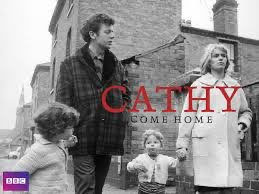
Returning to Christiano and Neimand they rightly make the point that awareness-raising can " be a critical step in creating an environment where change is possible" and can on occasion influence national political attention to an issue citing Black Lives Matter or Transgender Rights. I am reminded that campaigning playwrights or documentaries can have a powerful impact - for good or ill. The seminal "Cathy Come Home"  and homelessness spring to mind. However, the authors argue that awareness has to be linked to strategically explore " a larger effort to drive social change." In this regard they are uncompromising and evidence base that not only can campaigns ( and here I would add Days) fall short and waste resources when only about raising awareness but "actually do more harm than good"

Before exploring the risks I return to the issue of false assumptions and damaging presumptions that stereotype individuals and communities. No more is that prevalent than in the fields of, for example, refugees, Aid, compassionate ageism, social care, race and ethnicity, LGBT+,  loneliness, safeguarding, community development, and climate change. How we think about these and much else will determine our responses, the language and narrative we use, the images marketed and our messaging. The harm is done to individuals, communities, and even countries is incalculable. Undoubtedly some of this will be unconscious, even at a corporate level, and hence the need to at least become conscious of personal and political bias reflecting on the assumptions we make and the presumptions we hold.

Four risks are identified: 

  • Lead to no action: Using shock or humour which can dilute the message even if the campaign is seen at one level as highly successful in terms of attracting audience attention and even media coverage.  
  • Reaches the wrong audience: An audience that in fact has no sympathy with the cause/issue being profiled. In addition, those who are already convinced and engaged with the subject or issue or need. An example would be Human Rights, Refugees, Older Adults and loneliness (let's not forget the John Lewis Christmas advert Man on the Moon)!: Mental health, Travellers,  
  •  Creates harm: This can be linked to the wrong audience. Campaigns need to understand and be sensitive to how an audience might perceive the message. This often occurs when marketing experts are let loose with an issue of which they have very little knowledge but think they do! I recall many years ago taking the NSPCC to task for their Full Stop Campaign. At one level it was highly successful if judged by the number of people ( especially celebrities) who wore their little green badges. It was a false assumption that child abuse can be eliminated, it can't. Constantly referring to delayed hospital discharge as "bed blocking" leads to blaming older adults for bed shortages rather than resourcing hospitals, social care and indeed systemic issues of poor management. The point to be made is that campaigns can do little to address the context and the context is everything. We can so easily normalize issues and reduce or prevent effective responses that deal with the context. The authors raise the "gulf between scholarship (and academic research) that could help practitioners avoid harm, reduce risk, or increase the effectiveness of their efforts and practice is common and wide"  
  • Generates a backlash: Beware partisan politics within Campaigns whereby an issue can directly lead to increasing controversy. The examples used are Teenage and Later Life sex, Vaccine takeup. Here the media can and do feed off a range of issues to increase their own profile, sell newspapers, and can totally undermine a campaign.   


IT'S ALL ABOUT COMMUNICATION, TARGETTING, MESSAGING AND USING THE RIGHT MESSENGER 

This may seem blindly obvious but even multi-million corporate businesses can get it wrong. Ask Walkers Crisps and their "Walkers Wave" campaign; Pepsi suggesting that protesters give the police a can of Pepsi and the suggestion that " if protesters were kinder and gave police a drink, there would be no need for social justice demonstrations" or campaigns; and Amazon's promotion of their show The Man in the High Castle was generally seen as "irresponsible and offensive to WW11 and holocaust and their families" 

Having explored the risks Christiano and Neimand highlight four elements that are important to avoid backlash, harm, and inaction. Firstly to target the audience as narrowly as possible. We often think that a campaign or raising awareness needs to reach as many people as possible. Wrong! Targeting a single individual can be far more effective if there is clarity over the goal and a defined strategy. Secondly, whether an individual or an audience of millions requires a compelling message that resonates, that is also a call to action and does not alienate the very person/people whose attitudes and behaviour one is seeking to change. Thirdly a campaign or awareness-raising day needs to have a clear understanding of what will be different and finally use the right messenger ( oh how many have got this wrong by thinking that a celebrity, any "celebrity" will do? - I'll leave it there but here's a clue!)

  
                                           [ Appeared on the TV show "I'm a Celebrity Get Me Out of Here"
                                            coming 3rd in a public vote (2023)]

I suppose I'm arguing that all organisations, be they civic, civil, or retail think seriously about sacrificing their credibility, their brand, and their resourcing on any campaign or awareness-raising event on the altar of false assumptions and presumptions about their audience.