Saturday, March 16, 2024

The Portrayal of Older Adult Characters in Charles Dickens's Early Novels

"A CHRISTMAS CAROL" NOVELLA (1843)


PART ONE: INTRODUCTION AND CONTEXT


                                              OF EBENEZER SCROOGE:

"A squeezing, wrenching, grasping, scraping, clutching, covetous old sinner. Hard and sharp as flint - secret - and solitary as an oyster. The cold within him froze his old features, nipped his pointed nose, shrivelled his cheek, stiffened his gate, made his eyes red, his thin lips blue, and spoke out shrewdly in his grating voice" (1)


When I initially set out on this adventure to explore how and why Charles Dickens portrayed his older adult characters the way he did, I intended to focus only on his major novels, thus consciously excluding A Christmas Carol. This was partly to consider my time and capacity, and despite it being his most famous, it never really excited me. What a mistake! The story of four ghosts and their haunting of an ageing miser and moneylender on Christmas Eve, subsequently depicted in countless adaptions and portrayals, including Donald Duck, held little attraction. While researching and writing about Dickens's first four significant novels, I realised that Ebenezer Scrooge could not be ignored. My reading of many a Dickensian scholar and writer, including the likes of the wonderful Lucinda Hawksley, a direct descendent of Charles and Catherine Dickens and, on the recommendation of my oldest daughter, the fantastic Compendium of  A Christmas Carol by Stuart Pryke and Amy Staniforth (2) I could not continue to ignore the relevance of this Christmas story to my exploration of age and ageing in Dickens novels.

Dickens completed the novella (October-November 1843) in a matter of weeks while writing his serialization of Martin Chuzzlewit. As Hawksley points out, the year had been a challenging time for him, with the disappointing readership of Chuzzlewit, tensions with his publishers, and the fallout with his American readers following the publication of American Notes. " Although Dickens had written many favourable things in his travelogue, his wry jokes and outright criticism  - in particular slavery- made many of his former fans turn against him," says Hawksley (3). One thing Dickens valued above all was his fan base and, subsequently, his purse. 

The journalist in Dickens meant he researched and saw firsthand the dire social and political injustices and the plight of the poor and destitute of late Georgian and Victorian England. Again, Hawksley references that he "felt sickened by the enormous gulf between the wealthy and the desperate". It is worth pointing out that in "May, he went to a fundraising dinner for the Charitable Square Infrimary, a charity which cared for elderly poverty-stricken men". The audience was wealthy bankers whom Dickens, writing later in correspondence with a friend, says were "sleek, slobbering, bow-paunched, overfed apoplectic snorting cattle" (4). Don't you just love Dickens! Would a fundraising event of wealthy bankers in the City today be any different? 


A Christmas Carol challenges and deals with Want, Ignorance, Injustice, and 'Education Education Education'(5). The night of the 24th/25th December was transformational for Scrooge personally, an epiphany that will be discussed in detail. It is important, however, to explore and understand Dickens's intention. Blogger and writer Chris Curtis offers insights that, though primarily for students of English, give a useful framework to contextualize Dickens's commentary on the social ills of the time. Curtis is worth quoting at length in that he rightly argues that saying Dickens 'challenged' is a word lacking nuance, "a blunt word to describe a complex situation."  He writes further: " 'A Christmas Carol' was written to be sold as a book. The people who could afford it would be rich. The book was a funny place. If it insults or attacks (or overtly challenges) the rich, then not many people would buy it. Therefore, the book doesn't attack the rich in general...the book is designed to provoke emotions in the Victorian reader to feel good about themselves when they are kinder and charitable towards other people. If we look at the book, it isn't anti-rich. Scrooge, at the end of the story, doesn't stop being rich. He stays rich but shares some money, time and company with others. So, in effect, the book is flattering the rich who behave like this, but at the same time subtly guilt tripping those that don't behave like this," and here's the rub, " We often place a lot of emphasis on the redemption of Scrooge when, in fact, Scrooge represents varying parts of the readership. Of course, we boil this down to a simple soundbite like: Dickens challenges how the rich treated the poor" (6). Curtis encourages students to understand the inferences of the characters, readers, writers, and context.  What we are attempting throughout this series is to understand each in the context of Dickens's older characters, here, of Scrooge as an old man, what we as readers feel towards them when here referring to Scrooge's portrayal, what Dickens wants to achieve in the book and the wider attitude to age and ageing. A warning from Curtis that needs heeding: "All inferences around Dickens's thoughts and feelings are guesswork and conjecture. The best ones are rationalized inferences...."(7). These must be based on Dickens's narratives, plots, characterizations, financial circumstances, brand and reputation, and what was happening to him at the time of his writing. 


             Robert Doucette ( date unknown). Cartoon of George C. Scott as                                      Scrooge.1984 TV film of ACC (2013).Via Wikimedia


Dickens took, via Marley and the spirits, what could be viewed as a life course approach to the person of Scrooge, and in doing so, we learn a great deal about Scrooge's early childhood and young/middle-aged adult years and the influence of Marley and the older Mr Fezziwig, the employer to whom Scrooge was apprenticed. What were these influencers and influences upon him, who in 1992 would be played by actor Michael Caine surrounded by a cast of Muppets! 


During this series of A Christmas Carol blogs, we will ascertain what Dickens attempted to achieve and why through this particular ageing character. In Dickens's journalistic years, he demonstrated an uncompromising commentary on the plight of the poor and destitute and the 'sickening gap between wealth and poverty. ' The wealth of Scrooge and the poverty of Bob Cratchit aided and abetted by a disabled child, have, over some 181 years, captured the imagination of readers and have, then and since, the adoration of theatregoers. Film and television reinforced the durability of his first Christmas story, which he had written in weeks. Why does it still resonate? What were and are now the intersections between age and ageing, and how was this 31-year-old Unitarian author, husband, father, and dandy preoccupied throughout his life with the state of his finances? 

The book is multi-layered, as are the characters of Scrooge and his creator.  Indeed, as we have discovered with our analysis of Samual Pickwick,  Fagin, and even Quilp - alta egos of Dickens himself!

From my reading, I have encountered very few Dickens biographers and commentators specifically addressing Scrooge beyond his life, his overnight experience and even his transformation from a gerontological perspective. It is time. However, I have gleaned through AI that Scrooge suggests that Dickens's view of old age was one of  "potential stagnation, where one's negative traits, attributes and attitudes can become more deeply ingrained. However, as the story progresses, Scrooge undergoes a transformative experience"  (8) implying that Dickens believed in the potential of personal growth and redemption, regardless of age. The journey Scrooge experiences " highlights the importance of reflection, self-awareness, and the ability to change one's ways, even in old age" (9). Overall, the portrayal is Victorian fare in that it "suggests that old age can be a time of bitterness and stagnation or an opportunity for personal growth and positive change. It serves as a reminder that it is never too late to mend one's ways and find happiness and fulfilment regardless of age" (10). This AI narrative reflects a 21st-century common myth about compassionate less, bitter and stuck-in-the-mud resistance to change, but with the possibility, given appropriate interventions or life events to learn new tricks, indeed to become or revert back to the outgoing hail and hearty life and soul and generosity of one's early years. Perhaps even moved away from Capitalism to liberal philanthropy. Though Dickens bemoaned the Capitalism of the snorting herd of  Bankers, he nevertheless put out his bowl, using his celebrity status to benefit homeless older men. In essence, the notion of benevolence and gifting by the wealthy ignores the structural and systemic causes of poverty. Dickens is rightly celebrated as a reformer, a champion of the underclass and a very generous fundraiser. This cannot be denied, but as with Scrooge, Dickens benefited and was rewarded for that benevolence and gifting. We remain today in that Victorian mindset.

Jacob Jewusiak, a lecturer in Victorian literature, argues that older adult men, generally in Dickens, did not take a life course approach. Older characters were disconnected from their growing older experience. Citing Martin Chuzzlewit ( whom I will focus on when dealing with Dickens's 6th novel), little plot is focused on Chuzzelwit's early and adolescent years. Chuzzelwit was all about securing benefits for his descendants. Scrooge, on the other hand, is in the "interiorised stages of one's early life."(11) Scrooge did not reach maturity through his life transitions, learning lessons, adapting and reflecting but accumulating wealth - ' hoarding without end' as Jewusiak puts it. Furthermore, Jewusiak references the Victorian Bildungsroman   - 'to make good is to make money'. Scrooge thus makes good not through maturation and self-development but by becoming charitable as an uncle and employer (12). He, like Dickens, feared poverty. his later life remains the accumulation of wealth " with increasing intensity and frugality. Scrooge merely grows older as his capital grows, and as such, there is no story to tell," writes Jewusiak, concluding that " the "compression of youth, adulthood, and old age into a single body merges the horror of monstrous combination with the exuberance of success of Scrooge's reformation" (13)(14).  At the end of the day, or rather night, Scrooge becomes young, a time of fun, charitableness, energy and loved by all. 

Was Dickens challenging ageism as we understand it today, or simply reflecting his ambivalence to age and growing older? Remember, he was 34 years old with the notion that youth and young adulthood are good, and old is not unless the spirit of the young can be attained in later life? Jewusiak concludes that what "makes A Christmas Carol more than a mere bourgeois fantasy, where social integration is accompanied by economic independence, is Scrooge's old age. As we approach the end of life, the rules that structure socio-economic experience change....The Spirits merely remind Scrooge of what old age enables him to do: as he is liberated from the economic necessity that compelled him to abandon his engagement with Belle, the proximity of old age to the end of life multiplies possibilities available to Scrooge instead of closing them down" (15) Brilliant analysis for our purposes! Welcome back Fuzzelwit. 

Interestingly, the iconic G.K. Chesterton, an early Dickens commentator and literary critic who wrote in 1906 concluded that "Scrooge looked even uglier when he was kind than when he was cruel" (16). Chesterton, as we know, was an admirer of Dickens's promotion of social issues, his ideology and his writings. Still, in reviewing all of Dickens's Christmas stories, he comments that Dickens " could not admire anything, even peace, without wanting to be warlike about it" (17). We might ask whether the portrayal of Scrooge weaponised Christmas, rescuing it from its religiosity and promoting its fun and frolic, the overeating, and the merriment of a pagan past. Readers unfamiliar with Chesterton's commentaries on Dickens's works would be in for a feast! 


                           Gilbert  K Chesterton ( 1874 - 1936)


Back in the late 1930's Edmund Wilson published an essay entitled " Dickens: The Two Scrooges", and whilst I acknowledge that our appreciation and understanding of Charles Dickens and his life and works have considerably increased since Wilson, he interestingly references the dualism of Scrooge and his creator. The importance here is to understand the childhood and young adulthood of Scrooge, who represented "a principle fundamental of Charles Dickens's world and derived from his emotional constitution."(18)  Good and bad reflect Wilson was the counterbalancing values and pairs of characters, namely Bob Cratchitt and Scrooge that existed in Dickens. For example, whilst it is generally argued by Dickensian scholars that Dickens had a traumatic and emotionally precarious childhood with a keen sense of abandonment, loneliness and rejection of and by his family, especially his mother, Wilson points out that he was also lonely and alienated in society. He was trapped between two Victorian classes of "strict stratifications", one being the precariousness of the lower middle classes and that of the so-called aristocracy. His position was anomalous, and Wison writes Dickens "had grown up in an uncomfortable position between the upper and lower middle classes with a dip into the proletariat and a glimpse of the aristocracy through their trusted upper servants." which left him stranded and isolated in English society. In a sense, Wilson concludes, "There was no place for him to go and belong: he had to have people come to him"(19). The portrayal of his childhood was framed by John Forster, his first biographer and close friend, which, in turn, was framed by Dickens himself. Validation of what Dickens gave and drove him was the accumulation of wealth and public recognition and applause. Today, one can imagine him as a contestant in Big Brother or eating testicles in a jungle! For those readers wondering what I'm referring to.....I'll leave you to research these two popular and puerile TV shows!

As an amateur studying Dickens's Christmas Carol, and with the benefit of numerous sources delving into every aspect of Dickens's life and works, I have been surprised by the overwhelming lack of interpretations drawing on literary gerontological studies. The novella is a gold mine; the influence of Marley, the life course approach as represented by the spirits and the intersection with Victorian assumptions about age and ageing using Scrooge as our spirit and guide evidence why my original dismissal of the character was, in hindsight, ridiculous.


PART  TWO will be based primarily on the work of Stuart Pryke and Amy Staniforth (20) et al., I look at Scrooge and the novella through the prism of unmasking Victorian Ageism and old age  


REFERENCES AND SOURCES:

1. Taken from PHILIP A.J & GADD. L. The Dickens Dictionary. Bracken Books (1989), published initially by Simkin Marshall. London ( 1928)
2. PRYKE S & STANIFORD A. Ready to Teach. A Christmas Carol. A Compendium of Subject Knowledge, Resources and Pedagogy. A  John Catt Publication (2022)
3. HAWKSEY  L. Dickens and Christmas. Pen & Sword History (2017) p 65
4. Ibid p 67-68
5. The famous quote by Prime Minister Tony Blair
6. CURTIS C. Being Precise Around the Writers Intention Blog from 'Learning from Mistakes: an English Teachers Blog ( 18.02.24)
7 Ibid
8. AI Chat OIn ( downloaded 24.09.23
9. Ibid
10 Ibid 
11. JEWUSIAK J. Ageing, Duration, and the English Novel: Growing Old from Dickens to Woolf. Cambridge University Press (2020) Ch 2 p63
12 Ibid p64
13 Ibid p65
14. Ibid p 65
15. Ibid. p 66
16. CHESTERTON G.C. Appreciation and Criticism of the Works of Charles Dickens. Moncreffe Press edition ( 2022) p 84-85
17. Ibid p 85
19. WILSON. E. Literary Essays and Reviews of the 1930s & '40s. The Wound and the Bow: The Two Scrooges (1978) The Libary of America. (2007) p 315
20 Ibid p 308


.


Thursday, January 11, 2024

 THE PORTRAYAL OF OLDER ADULT CHARACTERS IN CHARLES DICKENS'S EARLY NOVELS

Novel Four: 

THE OLD CURIOSITY SHOP (1840/41)

PART TWO: "A most grotesque and fearsomely comic, malevolent user, ogre and leering" older adult (1)


Daniel Quilp was...." so low in stature as to be quite a dwarf, though head and face were large enough for the body of a giant. His black eyes were restless, sly, cunning, his mouth and chin, bristly with the stubble of a course beard; and his complextion was one of that kind which never looks clean and wholesome. But what added most to the grotesque expression of his face, was a ghastly smile...." (2)


                         Quilp, Mrs Quilp and Mrs Jarwin. Sol Eytinge,  r. Woodcarving.                                    Dickens's OCS+Rep inted Pieces ( Diamond Ed). Scanned Image and text by Philip V. Allingham. The Victorian Web


Daniel Quilp was an elderly man, but what was his role in the novel? Did he have to be old to fulfil his function as the primary villain? Did he have to be portrayed as "disabled", and it is argued by some critics to also be Jewish? I will explore these ideas in this blog. If there is one, the plot tells the story of thirteen-year-old Nell Trent (see Part 1) (3) and Quilp, who lends money to her Grandfather, taking control and possession of the curiosity shop and disclosing the old man's gambling addiction. He uses sarcasm to belittle and intimidate those he wishes to control, most notably his young wife. In addition, he eavesdrops to gain leverage over Nell, and Grandfather Trent drives a wedge between Kit and Nubbles when he claims it was Kit who squelched on the gambling habit! (4) Nell's somewhat idle older brother Fred conns the relatively easily led Dick Swiveller in believing that Grandfather Trent is sitting on a fortune. Quilp joins forces to track down Nell when she flees London with her Grandfather, knowing full well that there is no fortune, so his motive is to groom Nell "into marriage "; in other words, if necessary, to rape her. Quilp is, in Dickens's Portrayal, a sexual predator. Had Dickens based the character on an individual he had encountered, or was he simply expressing Victorian assumptions about old age, disability and Jewishness? Everybody whose life was touched by Quilp ended up in dire straights (5). We will, of course, explore the meaning of Quilp's death later.

It is clear, however, that whilst the plot(s) "are loosely improvisatory and episodic, arranged primarily in broad contrasts of comedy and pathos, darkness and light, city and country"(6), the story is inevitably set within a "clear moral framework."(7) In drawing conclusions about all the principle characters in Dickens's canon and especially Dickens and old age, Helen Small reminds us that literary criticism is not evidence. The portrayal of older adults in fiction cannot necessarily be any validation, and in our case, it is neither Dickens's gerontophobia nor even ageism. One must consider "ethnological data, the historical record, or personal testimony"(8). I quote Small, referencing Nussbaum's claim that "literature is an extension of our ethical education."(9) Arguably, many of Dickens's older characters, and hence here Daniel Quilp, as was Pickwick and Fagin, are dominant portrayals. There is no doubt these characters, in my mind, have indeed "taken (the) strongest hold in our collective imagination ( providing) ways by which we recognize ourselves as a society, a civic body"(10). His novels' numerous films, and T.V. adaptions aided and abetted this. Equally, this applies to our collective perception and responses to age and ageing, then as now. 

Helen Small is instructive ( though I'll not confuse any reader, or myself, by dwelling on Theodor Adorno's metaphysics as it relates to Dickens and The Old Curiosity Shop, which Small draws upon). As it may, her observation of Dickens's "own expressed concerns about old age and its relation to youth, especially to childhood" picks up on the relationships between Nell Trent and her Grandfather and Quilp. Minor points out that "critics rarely pick up on the statement of Quilp's age accompanying his first appearance " and that " no account of his appearance or behaviour reminds" us of it (11). Well, this armchair critic does! Though, to be fair, Dickens inevitably portrays his older major characters' dress, economic circumstances, physical and mental conditions and much else, he does not necessarily dwell on their chronological age. Still, he has already framed them as "elderly" or "old" and used a range of pretty harsh and memorable descriptions of them alongside the age reference. Ageism is about othering, imagining and negative portrayals, but can this apply to fictional characters where the context of their behaviour and personality is about the plot and their relationship to it, together with the circumstances and characters around them? 

We know that Dickens regularly drew inspiration from individuals he knew or observed. Still, with Daniel Quilp, there is no evidence that he was based on a real-life individual. It is possible he combined several personalities, physical attributes, and descriptions. Even if this is the case with Quilp and the description and behaviour were simply a product of Dickens's imagination serving only to demonstrate greed, cunningness, and malevolence in the story, does this let him off the hook? 

Quilp is an iconic villain. He was harsh and uncompromising, but he was no fool. A strategic thinker who manipulated all those around him. Dickens had created a monster who made Wackford Squeers in Nicholas Nickleby look like a model educationalist and teacher. Quilp is about the relationship he had with the young- exploitative, abusive, and a paedophile but also about comeuppance who, like Fagin, paid the price for his behaviour of criminality and perversion. He was no Bill Sykes, who also came to a sticky and fatal end. There were other powerful old-age characters in Dickens. Scrooge is a  classic with an equally iconic portrayal demonstrating a transition into a good, kindly, warm, if not pretty 'juvenile' later life. Metaphysics - the science of existence and philosophy to one side; who cares that Quilp had a large head, black eyes, a ghastly smile and a grotesque expression? These attributes were about his character, not his chronological age, even though he was termed "elderly." It is said that many of Dickens's major older characters in his early novels were more about the "embodiments of a pure comic spirit and their capacity to cause hurt". They were clowns, unrestrained, vivacious and resourceful. "Quilp is bulling his young wife by a display of indiscriminate veracity," writes E.D.H Johnson and "these characters also make an enduring appeal through their historonic virtuosity."(12) They are pantomime, to be booed on and off stage and Dickens loved a panto. Still, he was also a severe social commentator. We are invited to see the characters as they are, old or not. Dickens's comic and grotesque creations during his young adulthood writing did not require them to age or need any further literary development. (13)


                                     Characters From Dickens: Issued by John Player & Sons. A                                          branch of Imperial Tobacco. Co. (of Great Britain & Ireland) Ltd.                                   A  Series of 50. No 27 ( 1923) 


The representation of Quilp, as with Grandfather Trent ( Part1), through a 21st Century lense, however, leads us to consider "isms". Much has been written about women and girls in Dickens. Of particular note is that of Michael Slater and, latterly, the edited work of Edward Guiliano (14)(15). I will explore later in the Series Dickens and Older Women. That said, the general consensus from scholars and commentators is that they are benign. Regarding Little Nell ( and others), we see Dickens's attitude towards their descriptions as innocent, virtuous, vulnerable and chase. In terms of women, whilst he portrayed their strengths and weaknesses, he acknowledged the societal constraints and oppressive circumstances; Mrs Quilp is a case in point. But they were also depicted as strong, intelligent and capable. Many of his older women were wise, nurturing, resilient, and supportive of younger generations. Dickens, it is said in general terms, respected their wisdom and experience. (16) This narrative has become accepted without question. In one regard, the conclusion is innocuous if we view all of Dickens's older adults equally. The importance of Quilp's Portrayal presents a language and narrative of old age and one that fed the stereotypes common in the era and feeds into today. It is all very well to view Quilp as a comic Punch and Judy type. However, if we are comfortable critically analyzing Dickens's Portrayal of women, girls, and children generally, why not with his older adults? The present-day and Victorian negative framing of old age was and is synonymous with disease, illness, infirmity, and disability. Was Quilp viewed as a stereotypical elderly villain or simply a villain who happens to be old? The age disparity in sexual relationships has been a feature of many cultures, past and present. Quilp was married to a young wife. Was he an ephebophiliac? We know he lusted after Nell, but it was less about establishing a relationship and more to do with sexual abuse and rapeing a thirteen-year-old girl. 

From Quilps' age portrayal, two additional intersections need to be explored, namely disability and antisemitism. Had Dickens created old-age, disability and Jewish hate stereotypes in one character? Were there unconscious biases in play here?


'MINORITY MALICE: THE CURIOUS CASE OF DANIEL QUILP' (17)


                           Top: Watercolour illustration by Joseph Clayton Clarke of Fagin (O.T.)

                            Wikipedia

                           Below is the original watercolour of TOCS: Tennant, Dudley - Jonkers                             Books. From Little Nell and the TOCS. Told to Children by Ethel                                     Lindsay. S.W. Partridge & Co. (1921). Stock ID 37765


I discussed the case of Fagin in an earlier blog (18), and he is name-checked here to demonstrate why age and antisemitism intersect for the second time in Dickens's early writing.


"Dear Mr Dickens": Antisemitism exposed?

Eliza Davis is best known for her correspondence with Dickens and was a fan. She was very impressed with his depiction of poverty, child labour, and the precariousness of the working class of London. Dickens was already a celebrity and powerful. On her first reading of Oliver Twist, Eliza was moved by the boys' Portrayal and his story until she reached Chapter Eight. She then challenged the Portrayal of Fagin, pointing out that Dickens had "encouraged a vile prejudice against the despised Hebrew."(19). Dickens's initial reaction was defensive. He replied, "I have no feeling towards the Jews but a friendly one. I always speak well of them, whether in public or private and bear testimony ( as I ought to do) to their perfect good faith in such transactions as I have ever had with them" (20). He could have added, 'Some of my best friends are Jews.' but did say "it is unfortunately true, of the time to which the story refers, that that class of criminal almost invariably was a Jew"(21). Davis had also asked Dickens to "atone for a great wrong."(22) 


Dickens's antisemitism had a history! Dr Helena Kelly, an Oxford University academic, writes, "If Oliver Twist's antisemitism is bad, The Old Curiosity Shop is worse."(23) and continues that "Quilp's helpers, the corrupt lawyer Sampson Brass and Sampson's sister Sally, are Jewish; their ethnicity not -at this time- ever explicitly stated but clearly indicated."(24) Kelly is uncompromising. She argues that we should not minimize Dicken's antisemitism" while murmuring some bromide about ignorance, or widespread Victorian attitudes...Dickens chose racist tropes in his work because there was a market for it. For many people, that might make the situation even worse" (25). Kelly's proposition is that both the Fagin and Quilp portrayals served to ensure " that no one was likely to suspect that he had Jewish relatives", which he wanted to hide. (26) 


Before examining the intersections between old age, disability and antisemitism, " The Curious Case of Daniel Quilp" by Tobias Langdon is worth exploring. The argument is that " if an accusation invokes a hate-filled stereotype, the accusation can be dismissed out of hand" as it needs to be benchmarked against statistical reality. Basically, Dickens's own defence of Davis. Langdon alerts us to the notion of 'hidden hate'. If Dickens resented the criticism of Fagin, then Daniel Quilp was a response to it, and whilst his Jewishness was implicit, Fagin had been repeatedly called a Jew, Quilp is repeatedly called a dwarf. (27)  Langdon's position is that Dickens 'intended to expose reality in the hope of reforming it. Jewish criminals like Fagin really existed' (28). Quilp to Langdon was Dickens's way 'to convey some shocking ideas about minorities in general', and as a dwarf, he belonged to a 'visible minority and subject to majority prejudice based on liberal ideology and hence the vitriol Dickens received' and still does! That said, Quilp's creator ( remember, he was not based on a natural person whom Dickens had come across) produced an anti-semitic, "elderly", and "disabled" dwarf stereotype but chose to avoid another 'Fagingate'. One just has to look at the numerous illustrations of Quilp, both at the time and subsequently, that portray a stereotypical Jew (29). What does Langdon conclude? "Dickens was motivated not by hate or prejudice but by realism and personal observation"(30)


                                 Dickens's The Old Curiosity Shop Library Edition, facing V.33
                                 Scanned images and texts by Philip V Allingham. Victorian Web


Victorian Image (unsourced)


Time to look at the 'othering' of people during this era and the perceived threat of what was deemed 'Jewish contagion' and English exceptionalism. (31) The Jewish pathology was predicated on a 'degenerate race more susceptible to disease', and as Stephanie Pokras writes, whether Jews were "diseased or supreme, the Jew was treated as a medical anomaly, an exotic object of morbid fascination not unlike that elicited by Victorian Freak shows"(32). Dickens's obsession with disease, death, pollution, degeneracy, contagion, criminality, addiction, deformity, racial characteristics, sexual depravity and deviancy came from a fertile Victorian 'othering' not just regarding Semitism but ableism and ageism. Walk on Daniel Quilp, that ticked every box. 

It is not surprising that disabled people ( including those with Dwarfism?) were regularly and negatively portrayed.

DICKENS AND DISABILITY

Disability in Victorian novels was "regularly represented as a fantasmatic novelty that simultaneously delighted and disgusted," writes Clayton Tarr. (33) Dickens was a novelist where disabled people, young and old, featured as both major and minor characters. There was, however, a fundamental difference in the intergenerational portrayals. S.F. Wainapel says that "disabled children are depicted as innocent victims, while their older counterparts are most often viewed as corrupt victimizers whose physical deformities are outward manifestations of their inner depravity."(34)  The iconic Tiny Tim and Smike are sentimentalized, whilst Quilp is demonized. John Ruskin considered Dickens a Sensational Fiction writer of low literature, given his preponderance of depicting illness, death and disability. However, alongside many other Victorian authors, illness, traumas, or eccentricities were the most plausible reasons for disabled characters. (35) If Dickens was ambivalent about age and ageing, he certainly was with disability. Julia Miele Rodas puts this down to "the relationship of power and identity that surround the presence of a disability that the disabled body becomes the locus around which Dickens forms and centres his identity, his sense of himself as a writer and narrator" (36). We have already, in a previous blog, examined Dickens's health, epilepsy and mental illness and interests in all things medical, which would arguably shape his view of disability and disabled people. Did it translate, as some argue, to advocating for better treatment of them? Indeed, one character, such as Quilp, does not allow us to reach a conclusion, but the prevalence of so many disabled individuals in his novels does. With children, he views through the prism of pity, pathos, sentimentality and vulnerability; with older adults, he failed to challenge the notion of later life infirmity and disability in any other way but as an 'outward manifestation of inner depravity or punishment for moral failings' (37)  Can it be as Jenn Soehnlin asserts, that Dickens taught his readers, and us "that people are more than their diagnoses or disabilities that despite their social class, race gender or ability. God Bless us, everyone"? (38) 

Did Dickens navigate the two constructs of Victorian disability, firstly the premise that the disabled person 'has been deprived of his ability to create a self ' and secondly, the belief that ' the disabled are blessed or damned but never wholly human' (39). From the literature I have accessed, he never resolved the constructs. Still, he could translate his observational experiences into narratives reflecting Victorian attitudes to disability. We know that Dickens often had different public and private opinions depending on his audience, the protection of his public brand, and the marketing of his novels. He gave no quarter to Quilp!

Clare Walker Gore's study examining the significance of disability in nineteenth-century fiction not surprisingly includes the work of Charles Dickens. (40) She emphasizes that the term 'disabled' was not used then as it is now and is, of necessity, anachronistic. Narratives do not use the term disabled but 'crippled, 'afflicted', 'maimed' and 'deformed'. Quilp is a dwarf, but did that make him disabled? He was capable of work and mobile and could not be considered infirm. Yet the notion of disability is evident in his physical Portrayal, and his Dwarfism was of an 'identity-defining' difference ' which cannot be completely disentangled from the Victorian cultural definitions of Dwarfism. Erin Pritchard and Robert Kruse remind us that Dwarfism has a "unique and ambiguous history with its roots in mythology, the commodification of anomalous bodies through enfreakment, and pathologizing of bodily difference" (41). As I indicated earlier, we can only view Quilp's Dwarfism by reflecting on the description of Little Nell's physical Portrayal and Youth. Gore also intends to show that Quilp uses his physical appearance to intimate all those around him and capitalize on it. Dickens capitalized on the sentimentality of Nell and the grotesqueness of Quilp. (42) He, like so many of the memorable characters Dickens penned, continues even today in adaptions and illustrations, showing what Gore says are "melodramatic approaches to the disabled body" (43). It's an important point, as is her conclusion that you cannot pigeonhole a single "Victorian way of seeing disability. Instead, it testifies to the shifting nature of cultural constructions of disability, to the mutability of our ideas about the body, the multiplicity of the purposes these ideas can serve, and the possibility that always exists for reinvention" (44). In passing, I cannot recommend Gore's publication highly enough. In my view, Dickens placed disability within a social context, and arguably, his vehicles were Quilp and Little Nell in this fourth novel. There is also such a concept of situational and relational disability, which Dickens acknowledged, even though, in the main, it was implicit.

THE DEATH OF DANIEL QUILP

                         The Death of Quilp is Phiz's final illustration of Quilp's fortunes. (1841)
                          Vignette tailpiece to Chapter 67. Master Humphries Clock. Part 40.Vol 
                          2:187


The symbolism of Quilp's death has been well-documented and discussed by many Dickensian scholars and commentators. Did he commit suicide or simply a casualty of a London fog and a decrepit wharf structure where he slipped and fell into the dark blackness of the Thames? His inquest ruled that he died by suicide and was "left to be berried with a stake through his heart in the centre of four lonely roads"(45). But was it accidental suicide, and therefore not his intention to die? 

The melodrama is self-evident given Dikens and the Victorian obsession with death and 'horrible gothic deaths', and his own about drowning. Was Quilp just yet another older character who never in his later years transformed or repented past deeds and actions and became a stereotype of a "lovely old and kindly" individual motivated to put right wrongs inflicted? He paid the price. He had to die. But that manner of his death compared to that of Nell's and Grandfather Trent. If Quilp died by determined suicide, what motivated it? Shame and guilt over his years of depravity and criminality simply don't work. The narrative circumstances and depiction of his final moments were Dickens at his brilliant best. 

The Phiz illustration above (1841) is equally potent, and whilst the fraudster Sigmond Freud was way into the future, it is the Freudian analysis that is full of phallic symbolism (46) 

The death of Nell had to be peaceful, an escape from her suffering and victimization, as, after all, she was a proxy for Mary Hogarth. Quilps' had to be violent and also demonstrates Dicken's emotional trauma, but this time, he is also "being haunted by a mental picture of a drowned man ...laid out in a house of death" (47). Quilp was "deformed both inside and out"(48), unrepentant and unforgivable. Professor Barbara Giles argues that his death was one of Dickens's 'accidental suicides', emphasizing that he was "attempting to escape his fate like cruel Bill Sykes in Oliver Twist", but he actually "seals it"(49). She highlights that in the case of Quilp, his "self-destruction works like the hand of Justice....their excessive desperation to live is what causes their demise."(50). It is a compelling argument. 

Returning, as one must, to the phallic symbolism, the illustration was personally approved by Dickens. It was unconscious, but be that as it may, most symbolism is. It also does not detract from the symbolism inherent in the very Portrayal of this ageing dwarf, his deformity and his life grotesqueness at almost every level. It evidences the Victorian belief about the old and the ageing, either one of transitioning into a good old age (reference Pickwick into maturity, or Scrooge into generosity) or one of the justified endings, whether through intentional suicide ( reference Ralf Nickleby who hangs himself in a mood of frenzy hatred and despair) or through the hangman's noose ( reference Fagin), self-recrimination or suicide.

DICKENS, QUILP AND AGEISM 

There can be little doubt that ageing narratives in both fiction and non-fiction have, over the past 200 years or so, become more negative from 'heroism and kingship' to the 1800s' "darker tones of illness, death and burden"(51). Fiction presents a picture that needs to be clarified. On the one hand, it has defied this trend, but I disagree that at the time of Dickens's writing, it did. However, Dickens's tendency was not to generalize older adults as a homogenous group, given the broad range of his older character portrayals. That does not mean they were anti ageist. He reinforced stereotypical later life views of generational, gender and class biases. The notion of a good old age (a Golden time in today's parlance), of courtship, romance, happy endings, and wealth via inheritance for the deserving lives on into 2024! (52). We would include the notion of 'compassionate ageism' today. Nj Lim et al. concluded in their study of age narratives over the past 200 years that in the 19th Century, fiction " revolves around courtship and romance, respect, death, happiness and contentment" (53). The researchers also included magazines and weekly or monthly publications in their conclusions. In our discussion context, old age or ageist narratives were about honour, death, venerableness, memory, respect, infirmity and dependency.  

What needs to be recognized as we journey through Dickens's portrayals is that he reflected all these later life narratives. Still, it is also essential to acknowledge that ageism is not simply about negative versus positive imaging. The notion of positive and active ageing populates much of today's writings and arguably ignores social class and cultural differences. Ageism today and in Dickens's time was normalized. He simply reflected the Victorian view, so was that view binary and based on ageist stereotypes? (54)

The importance of Daniel Quilp's Portrayal lies within the intersectionality of ageism, antisemitism, and disability for this author in his late Victorian twenties, and it is unsettling. I have demonstrated that it cannot be separated from the Portrayal of and the relationships between Quilp, Little Nell and Grandfather Trent, each in their own way illustrating stereotypes of young and old alike. 
          
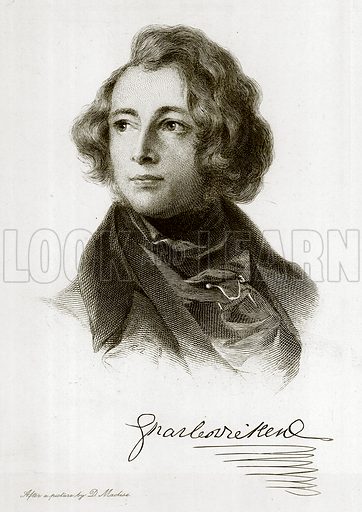
                                 EARLY PORTRAIT OF CHARLES DICKENS BY
                                                               DANIEL MACLISE


THE SUPPORTING CAST OF OLDER ADULT "PORTRAYALS"


Whilst having primarily focussed on two principal older adult characters in this two-part blog, it is always necessary to highlight lesser portrayals. They help to see whether there is a  pattern to Dickens's approach to old age and older people. 

Mrs Jiniwin: Quilp's mother, who lived with her son and daughter-in-law, was ' shrewdish in her disposition and anti-authority. She was, however, no match for her son! Donald Hawes points out that Dickens based the Portrayal of her on Mrs Hogarth, his own sister-in-law (55)

Mr and Mrs Garland: Mr is described as a 'little fat placid gentlemen' whilst his wife is a little old lady, plump and placid like himself' They are benevolent to Kit Nubbles, and Howes references John Forster, Dickens biographer who states that Dickens recalled' a kindly family in whose house he lodged' when his father John Dickens was imprisoned for debt' (56) The importance of this association relates to the time the thirteen-year-old Dickens was working at the Blackening factory. 


                  'Mr Garland Charges Kit to Return: Hablot Browne (Phiz). (1840) Note the illustration does not give a clear indication of the description in Dicken's text


Mr Marton is depicted as ' the kindly old schoolmaster who befriends Nell and Grandfather Trent. Though we are not given any age-related information, Dickens describes him as ' a pale, simple looking man, of spare and meagre habit, and sat among his flowers and beehives, smoking his pipe in the little porch before the door' (57). Repeated terms such as 'pale' and 'little', 'plump' and 'placid 'lean us towards Dickens's ageism.

The Narrator: [See main text. Part One] (58)


Old Foxey: The 'revered father of Sampson and Sally Brass. His age is not given, and he is not referenced as a character in Philip and Gadd (59)

David: Classed as "elderly and deaf" (60)

Old Woman at Graveyard: 'Meets Little Nell in a graveyard and reminds us of lost love' (61)

Harry's Grandmother: A minor character, but here, the grandmother of the schoolmaster's star pupil (62). It should be noted that grandparents figure in several of Dickens's novels and short stories (e.g. N.N., H.R., MP, F.F., MC, B.H., L.D., SSB.) with little description. (62) In a later blog, I will pick up on this in the context of Dickens's relationship or knowledge of his maternal and paternal great/grandparents.

Disapproving Old Lady: Shouts at "the meek schoolmaster after he lets the boys out of school early."(63)


Summoning Old Woman: Who calls the schoolmaster to Harry's death (64)

Man in Black: Though again, neither his name is given, he is interesting on two counts. Firstly, he is a 'man of law' who "can be merciful in one case but is criticized for not being merciful enough". Secondly, the disability of a deaf boy is shown mercy because of that disability. There is 'another mother' who "thinks it is unfair her child didn't get justice because he wasn't disabled" (65)

Becky Morgan: ' A woman from a neighbouring hamlet who dies whose age is in dispute!

Nice Old Lady: Prepares food for Dick Swiveller and the Marchioness (66)

Maunders: He is remembered by Mr Vufin: " I remember the time that old Maunders had in his cottage in Spa Fields in the winter time when the season was over, eight male dwarfs and female dwarfs setting down to dinner every day......" (67) Given this is a remembrance one has to be cautious.

Old Luke: Cardplayer referred to in a tale by Isaac List. (69)


By way of conclusion, let me quote Peter Ackroyd on The Old Curiosity Shop, who, not surprisingly, articulates far better than I ever could: "No one but Charles Dickens could possibly have written it, and more than any other of his novels it bears all the marks of his striaPortrayalul, complicated and perhaps ultimately baffling personality."(70) Dickens's portrayals of older adults, I believe and have tried to demonstrate, are in themselves "part fairy-tale and part farce, part religious parable and part pantomime" (71) and thus reflect Ackroyd's point. 


                                    oooOOOooo

 
[Out of a cast of some 120 characters, there are 50 whose ages are uncertain, and I have therefore deemed it unsafe to include, e.g., Mr Witherton and Mr Slum and James Groves; I may have missed some].


The following Portrayal in this Blog Series will focus on just one character from The Christmas Carol. It could only be Ebenezer Scrooge.


 References and Notes

1. The Dickens Collection: The Old Curiosity Shop (Vol 1.) 17. (2004) with reference in addition to HAWES D. Who's Who in Dickens. Routledge (London 7 New York) (2002) p193
2. Ibid. Hawes
3. EASTMAN.M. The Portrayal of Older Adult Characters. The Old Curiosity Shop. Part One ( December 2023) CooperativeMerv.Unleashed. blogspot
4. Wikipedia. TOCS ( Consulted 2023)
5. Ibid
6. SCHLICK.P. General Editor: The Oxford Companion of Charles Dickens. TOCS: Plot, Character & Theme.Anniversary Edition. (2011) p 435
7. Ibid p 437
8. SMALL.H. The Long Life. Oxford University Press. (2007) p 16
9. NUSSBAUM, M. C. "Poetic Justice: The Literay Imagination and Public Life. (Boston: Beacon, in SMALL. H )( ibid p 17)
10. Ibid. Small (p17)
11. Ibid (p 195)
12. JOHNSON, E.D.H. The Presentation of Character. Five: Victorian Web ( January 2000)
13. Ibid. Johnson
14. SLATER. M. Dickens and Women. EER Publishers. Brighton ( 2017)
15. GUILIANO. Edward. Dickens & Women ReObserved. EER. Publishers. Brighton (2020)
16. Taken from AI ChatON. (18.12.23)
17. LANGDON. T. Minority Malice: The Curious Case of Daniel Quilp Accidental Observer ( Dec 9.2016)
18. EASTMAN. M. Blog: Oliver Twist N.N. December 31st, 2022.
19. BAUMGARTEN. M. The Other Woman - Eliza Davis and Charles Dickens. Dickens Quarterly. 32 (1):45 (2021) Referenced in Wikipedia. Eliza Davis (Letter Writer)
20. JOHNSON. E. ( 1.01.52) 4 Imitations of Mortality. CharlS.G.ickens His Tragedy and Triumph & Schuster. Referenced in Wikipedia
21. HOWE. I. 'Oliver Twist - Introduction ( 31.05.2005). Referenced in Wikipedia
22. CHURNIN.N. "Dear Mr Dickens" AlberC.C.' man & Co. (2021)
23. KELLY.H  The Life and Lies of Charles Dickens. Icon ( 2023)
24.Ibid (p40)
25 Ibid (p41-42)
26 Ibid ( p88) 
27.Ibid. Langdon
28 Ibid Langdon
29 Ibid Langdon
30. Ibid Langdon
31. POKRAS. S.G. Whose Line is it Anyway? Rhetoric, Pathology and the Jewish Race in Victorian England. M.S.College Wooster Open Works; Senior Independent Study Theses ( 2021)
32. Ibid. (p24)
33. TARR. C.C. 'Abnormal Narratives; Disability and Omniscience 'in the Victorian Novel. (2J.M.' 5. Victorian Literature and Culture (2017) p 645-664. Cambridge University Press (2017) 1060-15,03/17 (P 645)
34. WAINAPLE.S.F.  'Dickens and Disability' Disabil. Rehabil. (1996) Dec; 18(12) 629- Abstract
35. HOLMES, M.S. & MOSSMAN M. 'Disabilty in Victorian Sensation Fiction'. Ch 38. In  A Companion to Sensational Fiction: Edited by GILBERT P. K. Blackwell Publishing (2011) (p 496)
36. ODAS. J.M. 'Tiny Tim, Blind Bertha, and the Resistance of Miss Moucher'. Charles Dickens Studies Annual. Vol 34 (2004).p 51-97. Penn State University Press (2004)
37. American Friends of Tel Aviv University 16.01.2013. Charles Dickens Literature Show cased Discrimination Against the Disabled. Disabled World. (Retrieved Jan.C.W.' 
38. SOEHNLIN. J. "What Dickens Teaches Us about Disability in his Christmas Novellas. (Source unidentified). Published December 15.2019. www.embracing life.
39. WILLIAMS. H. 'Black Epocs': Narratives of disability in Charles Dickens's TOCS and DINAH MULOCK. Craik's John Halifax Gentleman. VicU.K.rians: A Journal of Culture & Literature (Issue 122). Ohio State University Press. (2012)
40. GORE, C.W. 'Plotting Disability in thB.T.'  Century Novel. Edinburgh Critical Studies in Victorian Literature. EUP (2021) 
41. PRITCHARD, E & KRUSE, R. Introduction: CulN.Gral Representations of Darwinism. Journal of Literary and Cultural Disability Studies. (vol. 14. Issue 2). Liverpool University Press (UK). ( 2020)
42. Ibid. GORE. p42
43. Ibid p236
44. Ibid p 236
45. Ibid. HAWES. p194
46. Ibid. Victorian Web ( 12.11.2200)
47. GATES, B.T. 'Nell, Quilp, and Accidental Suicides in Dickens's TOCS'. Victorian Web ( modified 18.05.2023)
48. Ibid 
49. Ibid
50. Ibid
51. NG.Lim et al. 'Ageing Narratives over 210 years (1810-2019)' The Journal of Gerontology. Series B. Vol 76.Issue 9 ( Nov 2021) pp 1799-1807) https://dio.org/10.1093/geronb/gbaa222.  Published 10.12.2020
52. Ibid. Victorian View [ Arguably the Victorian Approach]
53. Ibid. [could be viewed as broadly gerontophobic ]
54. Ibid. [ Ageism today and yesterday remain a narrative of homogeneousness of potentially a 50-year life course. Ng Lim and researchers concluded that age stereotypes concluded that age stereotypes "became more negative in a linear fashion: they were positive from 1810-1870 ( virtually the life course of Charles Dickens); neutral in 1880 and negative from 1890- 2009. ]
55. Ibid. HAWES. D. p121
56. Ibid. p87
57. PHILIP.A.j & GADD.L. 'The Dickens Dictionary. Crescent Books. (New York) 1989 edition. p. 188-189.
58. EASTMAN .M. TOCS Part One. The Portrayal of Older Adults TOCS: Posted 13. December 2023. 
59. Ibid. HAWES. 
60. Ibid. p56
61. The Literature Network. 'Character Summary. TOCS. (undated)
62. Ibid. Philip & Gadd p 125
63. Ibid. The Literature Network
64. Ibid. 
65. Ibid
66. Ibid
67. Ibid
68. The Charles Dickens Page: Character List A-Z
69 Ibid
70. ACKROYD.P.  'Introduction to Dickens'; Sinclaire -Stevenson. (1991) p 69.
71. Ibid